Paranoia
Intense, irrational suspicion that others mean you harm.
Paranoia is intense, irrational suspicion that others mean you harm. The chest is tight and the eyes scan. Hidden meanings appear in ordinary communication. The sense of being watched or targeted exceeds what evidence supports.
Paranoia is fear that has lost its map
Paranoia is the conviction that others intend harm when they do not. It is an extreme case of the pattern-finding mind running without enough data. Mild paranoia can be reality-tested. Check with someone you trust. Show them the evidence. Let them reflect back what they see. If your trusted person says the pattern is not there, consider believing them. Severe paranoia, especially with sleep loss or substances, requires professional help. There is no shame in this. The brain under certain conditions misfires in this particular way. Medication and rest can restore accurate perception. Reach out. The relief of the mind coming back to its own is real.
"Reality is merely an illusion, albeit a very persistent one."
— Albert Einstein
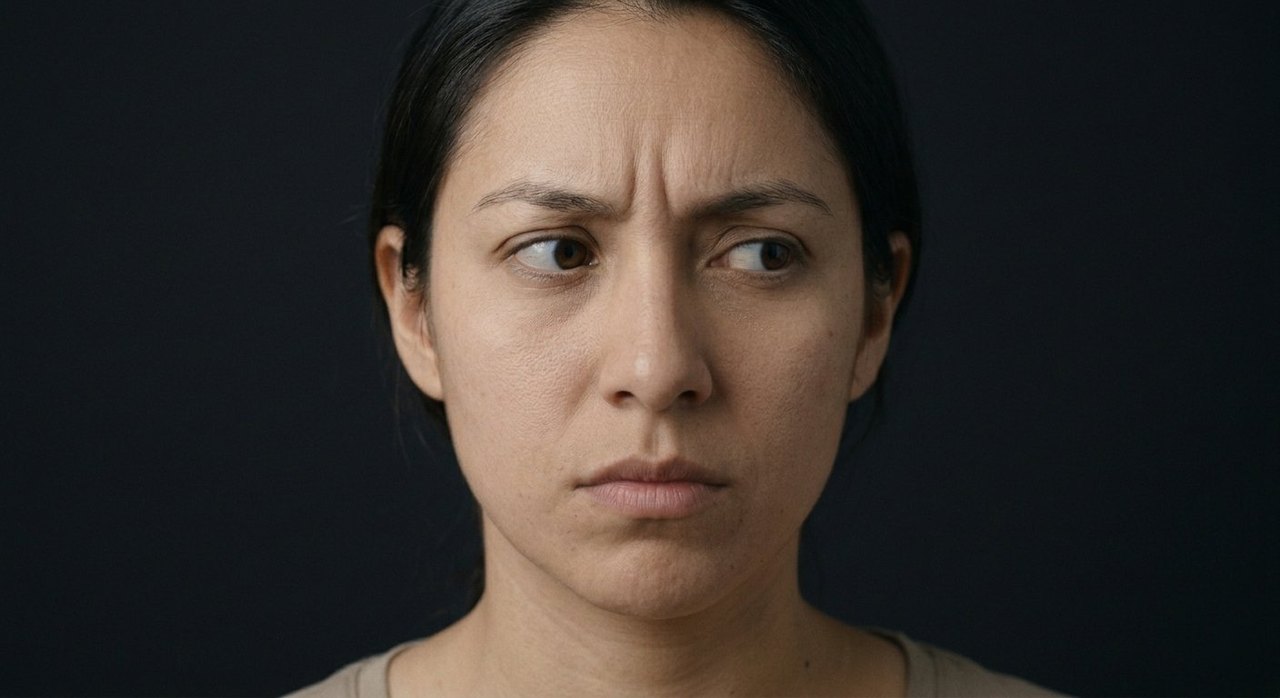
Paranoia has a distinctive body signature of sustained threat-monitoring. The chest is tight. The breath is often faster and shallower. The eyes scan environments and faces for signs of threat. The face may show particular alert or guarded quality. The voice may carry particular cautious quality, sometimes with hesitation about what to reveal. The body holds itself in a way that suggests vigilance: muscles ready, sometimes specific postures of protection or readiness for escape. Sleep is often significantly affected. The state can be sustained over days, weeks, or longer, often with cumulative effects on functioning and relationships.
Paranoia has been extensively studied, particularly through Daniel Freeman and colleagues' research on paranoid thinking in clinical and non-clinical populations (Freeman, 2007). Research has shown that paranoid thinking exists on a continuum from mild suspicions that most people occasionally experience to clinical paranoid disorders. Research on the mechanisms producing paranoia has identified factors including sleep deprivation, sustained stress, social isolation, certain personality patterns, and various psychiatric conditions including schizophrenia spectrum disorders, certain mood disorders, and PTSD. The capacity for paranoid thinking appears to be partly biological and substantially shaped by psychological and environmental factors.

Paranoia arises through specific conditions involving sustained threat-monitoring patterns. Common patterns include:
Paranoia is one of the more clinically significant states and benefits from professional attention when sustained. The following help.
Get professional evaluation for sustained paranoia
Sustained paranoia warrants professional evaluation. Multiple treatable conditions produce paranoid features, and identification often produces substantial improvement through specific treatment. Self-management of sustained paranoia without underlying assessment often does not produce adequate change. Mental health evaluation is the appropriate starting point for sustained patterns.
Address sleep, stress, and substance use
Sleep deprivation, chronic stress, and certain substances can produce paranoid patterns even without underlying psychiatric conditions. Addressing these factors when they are operating often produces substantial improvement. Mild paranoid patterns that develop during particular life stress sometimes resolve entirely when the underlying factors are addressed.
Test paranoid beliefs against evidence carefully
Some paranoid beliefs can be tested against evidence when the person is willing to engage with this approach. The testing should be done carefully and often benefits from professional guidance, particularly when paranoia is intense or has involved psychiatric conditions. Crude attempts to talk people out of paranoid beliefs typically do not work and can damage relationships.
Maintain social connection when possible
Sustained isolation can intensify paranoid patterns. Maintaining social connection with people who can be trusted, when paranoia allows this, often supports better functioning. The connection should be with people who can engage with the difficulty without confirming paranoid beliefs or dismissing them entirely.
If you are supporting someone with paranoia
Supporting someone with paranoid features requires particular care. Direct confrontation of beliefs often produces resistance and damages relationships. Acknowledging the felt experience while not confirming false beliefs, supporting professional treatment, and maintaining your own well-being all matter. Support groups and resources for families of people with psychiatric conditions can provide guidance specific to the person's diagnosis.
"Paranoid thinking exists on a continuum from mild suspicions that most people occasionally experience to clinical paranoid disorders. Research has identified factors including sleep deprivation, sustained stress, and social isolation as contributors."
— A summary of Freeman's research on paranoia
What is paranoia?
Paranoia is intense, irrational suspicion that others mean you harm. The body has settled into sustained orientation that treats others as threats, with attention directed toward identifying signs of harm in their behaviour, words, and presence. The chest is tight. The eyes scan. There is a quality of being unable to take social signals at face value, of seeing hidden meanings in ordinary communication, of feeling watched, targeted, or pursued in ways that exceed what evidence supports. Paranoia specifically refers to suspicion that exceeds what evidence supports, often with characteristic features including ideas of reference (treating ordinary events as specifically about you), feelings of being watched or persecuted, and difficulty correcting these beliefs with contradicting evidence.
Where do people feel paranoia in the body?
Paranoia has a distinctive signature of sustained threat-monitoring. The chest is tight. The breath is often faster and shallower. The eyes scan environments and faces for signs of threat. The face may show particular alert or guarded quality. The voice may carry particular cautious quality, sometimes with hesitation about what to reveal. The body holds itself in a way that suggests vigilance: muscles ready, sometimes specific postures of protection or readiness for escape. Sleep is often significantly affected. The state can be sustained over days, weeks, or longer, often with cumulative effects on functioning and relationships.
Is paranoia the same as being cautious?
No, though they can be confused. Caution involves appropriate response to actual risks; paranoia involves suspicion that exceeds what evidence supports. The distinction matters because caution supports good functioning while paranoia typically undermines it. Sometimes paranoid people present their paranoia as just being cautious; examining whether the response matches actual evidence supports distinguishing the two. Research has shown that paranoid thinking exists on a continuum from mild suspicions that most people occasionally experience to clinical paranoid disorders. Mild suspicious moments are not the same as sustained paranoid disorder; the latter involves specific features and often warrants professional attention.
Why do people become paranoid?
Multiple factors can produce paranoid thinking. Research has identified factors including sleep deprivation, sustained stress, social isolation, certain personality patterns, and various psychiatric conditions including schizophrenia spectrum disorders, certain mood disorders, and PTSD. Various substances can produce paranoid states including some recreational drugs (particularly cannabis in some users, stimulants, hallucinogens), withdrawal from some substances, and side effects of certain medications. Sustained isolation often produces paranoid patterns as social information becomes harder to verify against actual interactions. The capacity for paranoid thinking appears to be partly biological and substantially shaped by psychological and environmental factors. Different causes typically warrant different responses; mild paranoid patterns from sleep deprivation often resolve with sleep, while paranoid features of schizophrenia warrant specific psychiatric treatment.
How do you help someone who is paranoid?
Supporting someone with paranoid features requires particular care. Direct confrontation of beliefs often produces resistance and damages relationships. Acknowledging the felt experience while not confirming false beliefs, supporting professional treatment, and maintaining your own well-being all matter. Sustained paranoia warrants professional evaluation; multiple treatable conditions produce paranoid features, and identification often produces substantial improvement through specific treatment. Self-management of sustained paranoia without underlying assessment often does not produce adequate change. Support groups and resources for families of people with psychiatric conditions can provide guidance specific to the person's diagnosis. Maintaining your own well-being and getting support for yourself matters when supporting someone with sustained paranoia; the experience can be difficult for those close to the person experiencing it.
- Freeman, D. (2007). Suspicious minds: The psychology of persecutory delusions. Clinical Psychology Review, 27(4), 425–457. https://www.sciencedirect.com/science/article/abs/pii/S0272735806001486
Paranoia sits in the fear family as one of its most cognitively elaborated forms. It overlaps with anxiety when sustained worry is involved, with delusion when fixed false beliefs are present, with hypervigilance when trauma origins are central, with what clinical research has identified as a feature of multiple conditions, and with what continuum research has shown exists in mild forms in many people and clinical forms in specific populations.
See where paranoia sits among the other 402 emotions.
Open Paranoia on the wheel