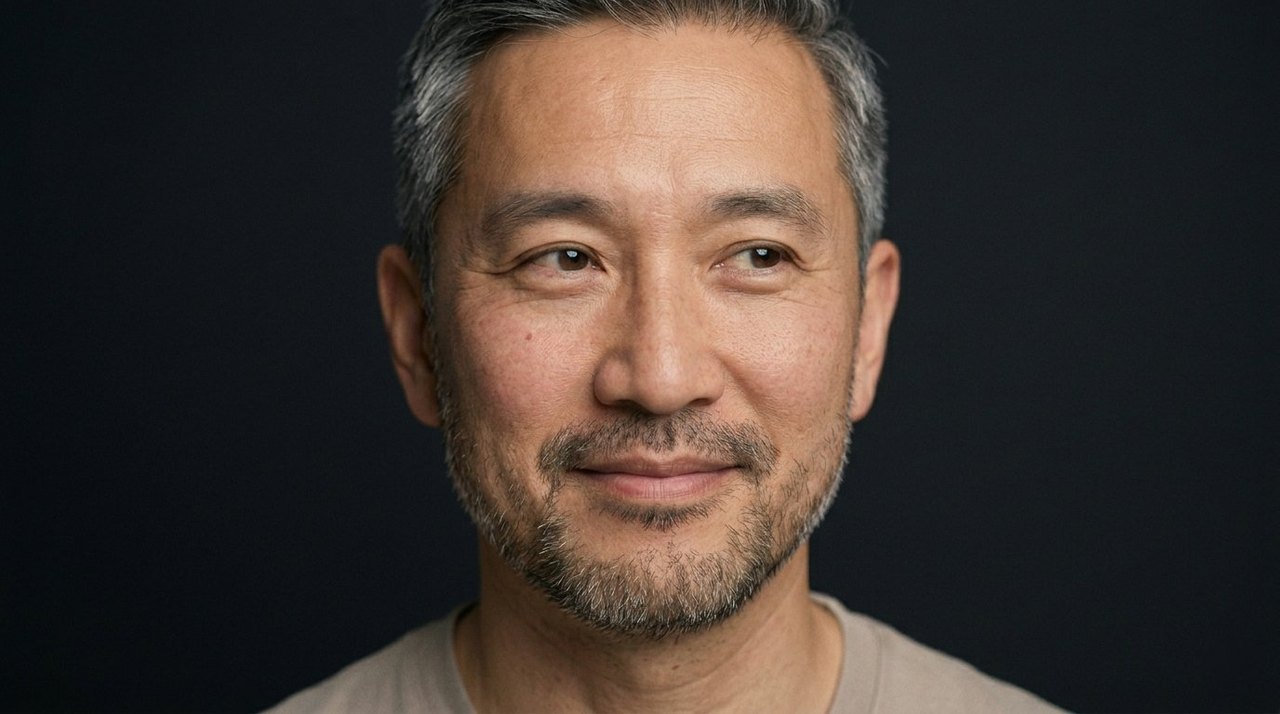
Trust
Confident reliance on someone's character or ability.
Trust is the felt sense that someone or something can be relied on. The body relaxes around them, the chest opens, the breath deepens. It rests on accumulated evidence, not wishing or believing. Social life would be impossible without it.
Trust is built in millimetres, broken in metres
Trust takes years to construct and minutes to demolish. This asymmetry is brutal and accurate. The work is not to avoid all breaches. The work is to keep small commitments faithfully so that the credit accumulates. Be on time. Say the truer thing. Do what you said you would. None of these is dramatic. All of them are deposits. When the inevitable breach comes, the depth of the previous trust will determine whether the relationship can hold the rupture. People who have run only on charm have nothing in the account. People who have shown up reliably for years can survive surprising amounts of damage. Make the deposits today. The withdrawals come unannounced.
"Trust is the glue of life. It's the most essential ingredient in effective communication."
— Stephen Covey
Trust has a soft, settling body signature. Around trusted people, the chest opens, the shoulders drop, the breath slows. The face relaxes its protective set. The whole body downshifts into a different gear, one that does not have to monitor for threat. This is the parasympathetic nervous system at work, and it is part of why being around trusted people is genuinely restorative.
Research on trust has consistently shown it produces measurable physiological changes: lower cortisol, lower heart rate, increased oxytocin, and reduced amygdala activation when interacting with trusted others (Kosfeld et al., 2005). Trust is also one of the strongest predictors of well-being across cultures and populations, more reliable than income or status. Communities with high trust function better on almost every measurable dimension than communities with low trust.

Trust develops in response to specific conditions and patterns. It is not granted by default and it does not arise randomly. Common patterns that produce trust include:
Trust is built slowly, broken quickly, and rebuilt with deliberate effort. The practices below help for building trust, repairing damaged trust, and protecting trust that exists.
Be reliable in small things
Trust is built more in small consistencies than in grand gestures. Showing up on time, returning messages, following through on minor commitments. The big moments tend to draw on the credit accumulated in many small ones.
Tell the truth, especially when it is uncomfortable
Lies, even small ones, even kind ones, erode trust faster than people expect. The truth, even when it is hard, builds trust at a rate that nothing else matches. Many adults discover this only in late repair attempts.
Repair quickly after ruptures
Trust damage compounds with time. A rupture addressed within days is easier to repair than one addressed weeks or months later. The repair does not require fixing the original event, only acknowledging it, taking responsibility, and changing what can be changed.
Calibrate trust to evidence, not hope
Extending trust beyond what evidence supports is not generosity. It is naivety that leads to betrayal. Trusting someone to be who they have shown themselves to be, rather than who you hope they could become, protects both of you.
If trust is chronically difficult
Persistent inability to trust, even with people who have demonstrated reliability, often traces back to early experiences where trust was broken or never established. This is treatable through therapy focused on attachment patterns. The capacity to trust can be rebuilt, often more carefully than before.
"Trust is built slowly and broken quickly. The asymmetry is one of the most consequential facts about human relationships."
— A theme that recurs in research on trust and betrayal
What is the difference between trust and faith?
Faith is belief without requiring evidence, often religious or spiritual. Trust is belief based on accumulated experience and evidence. The two overlap, especially in long-standing relationships where trust has become so settled it functions almost like faith. But trust is in principle revisable when evidence changes. Faith often is not. Trust is closer to a body state than to a belief.
Where do people feel trust in the body?
Trust has a soft, settling signature. Around trusted people, the chest opens, the shoulders drop, the breath slows, and the face relaxes. The body downshifts into a different state, one that does not have to monitor for threat. This is parasympathetic nervous system activation, the rest-and-digest mode, and it is part of why being with trusted people is genuinely restorative.
Can broken trust be rebuilt?
Yes, but not always, and not by the broken party alone. Rebuilding trust requires the person who broke it to acknowledge what happened, take responsibility without defensiveness, and demonstrate sustained changed behaviour over time. The rebuilt trust often has a different character than the original: more aware, less assumed. Some breaks are too large to rebuild from. Most are not, if the rebuilding is genuine.
Why do I find it hard to trust people?
Persistent difficulty trusting often traces back to early experiences where trust was broken or never established: unreliable caregivers, betrayal, abuse, or environments where vigilance was necessary for safety. The pattern persists in adulthood even when current relationships are safe. This is not character flaw or paranoia. It is the body's learned response. It is treatable through therapy focused on attachment patterns and past trauma.
How do you build trust with someone?
Trust is built primarily through reliability in small things over time: showing up when you say you will, following through on commitments, telling the truth especially when it is uncomfortable, repairing quickly after small ruptures, and caring without agenda. Grand gestures rarely build trust. Consistent small evidence over months and years does.
- Kosfeld, M., Heinrichs, M., Zak, P. J., Fischbacher, U., & Fehr, E. (2005). Oxytocin increases trust in humans. Nature, 435(7042), 673–676. https://www.nature.com/articles/nature03701
- Helliwell, J. F., & Wang, S. (2011). Trust and wellbeing. International Journal of Wellbeing, 1(1), 42–78. https://internationaljournalofwellbeing.org/index.php/ijow/article/view/3
- Rotenberg, K. J. (2010). The conceptualization of interpersonal trust: A basis, domain, and target framework. In K. J. Rotenberg (Ed.), Interpersonal Trust during Childhood and Adolescence. Cambridge University Press.
Trust sits at the centre of its family alongside acceptance, hope, and faith. These emotions all involve a settled relationship with what is, but each differs in what is being received and how.
See where trust sits among the other 402 emotions.
Open Trust on the wheel