Reverence
Profound, awe-tinged respect bordering on devotion.
Reverence is profound, awe-tinged respect bordering on devotion. The chest fills with warmth and the face softens. You have met something larger than ordinary objects of attention. The quiet posture of respect follows on its own.
Reverence is what stops you from breaking things
Reverence is the recognition that some things deserve to be approached carefully. The old book. The dying person. The opening of a difficult conversation. The wedding day. Modern life is mostly reverent of nothing, which is why so much of it feels disposable. Build reverence back in deliberately. Light a candle when you sit down to write. Take your shoes off in places that ask for it. Lower your voice when entering a hospital. None of this is religious. It is the practice of acknowledging that not everything should be handled with the same energy. Reverence is a kind of attention. It changes both what you are looking at and you.
"There are only two ways to live your life. One is as though nothing is a miracle. The other is as though everything is."
— Albert Einstein
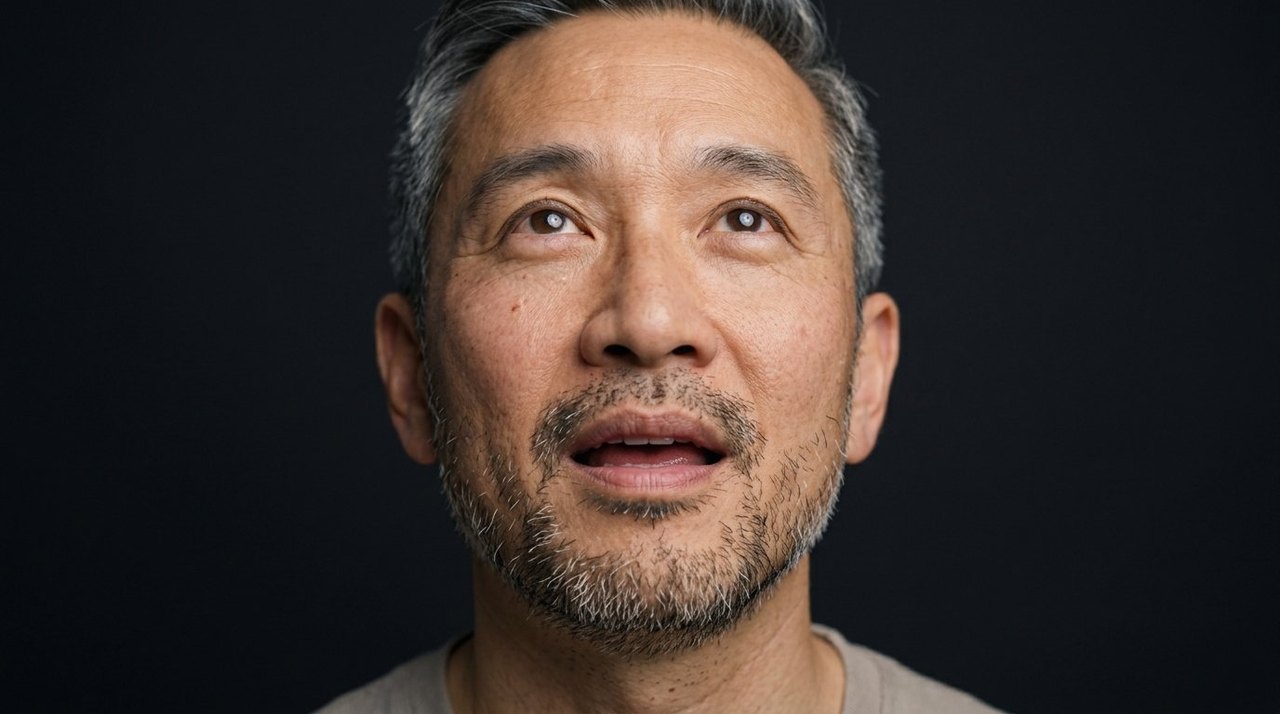
Reverence has a distinctive body signature of quiet attention. The chest holds a warm fullness. The face softens, often with eyes that hold what is in front of them. The body posture often shifts into a particular kind of stillness: head slightly lowered or steady, shoulders settled, breath slowed. There is a quality of inward quiet matched to outward attention. The body has decided that what is in front of it deserves a particular kind of regard, and has organised itself accordingly.
Research on reverence as a specific emotion has been limited but it has been studied alongside related self-transcendent emotions like awe and gratitude. Studies have consistently shown that experiences of reverence are associated with reduced self-focus, increased prosocial behaviour, and measurable changes in nervous system activation including vagal tone (Stellar et al., 2017). The body response includes some of the same markers as compassion and awe, suggesting these emotions share underlying neural circuitry related to recognising significance beyond the self.

Reverence arises in specific conditions involving encounter with something the body has recognised as profoundly worthy. Common patterns include:
Reverence is one of the more cultivable transcendent emotions when its conditions are understood. The following practices help.
Spend unhurried time with what merits reverence
Reverence requires the conditions in which depth can be recognised. Quick encounters rarely produce it. Sustained presence with art, with people of depth, in significant places, with ideas worth dwelling on: these are the conditions in which reverence can arise. The unhurriedness is essential.
Resist the modern habit of leveling everything
Modern culture has strong tendencies to treat all things as roughly equivalent, to view reverence as somehow naive or pretentious, to ironically distance from anything that asks for depth of regard. Resisting these habits, while keeping appropriate critical capacity, often restores access to reverence that culture has dulled. Some things really are more worthy of regard than others.
Cultivate practices that involve reverent attention
Many traditions (religious and secular) have developed practices that cultivate reverence: meditation, ritual, sustained reading of significant texts, time in sacred places, regular engagement with art. Adopting some practice that requires reverent attention often develops the capacity for it more broadly in life.
Distinguish reverence from idealisation
Healthy reverence includes the full reality of what is being reverenced, including its limitations. Idealisation requires perfect goodness and collapses when limitations appear. The work is to develop reverence that survives full sight, which often deepens rather than reduces it. The most deeply reverenced things usually have visible imperfections.
If reverence feels impossible to access
Inability to feel reverence, particularly when accompanied by general cynicism or flatness toward what should produce wonder, may signal depression, burnout, or chronic exposure to environments that have eroded the capacity. The capacity is usually rebuildable through deliberate exposure to conditions that support reverence and through reduction of the influences that have dulled it.
"Reverence is the body knowing how to meet what is genuinely worthy. It is one of the deepest capacities humans have and one of the most underused in modern life."
— A theme that recurs in research on self-transcendent emotions
What is the difference between respect and reverence?
Respect is the recognition of worth, often cognitive and deliberate. Reverence is the felt bodily experience of profound regard. Respect can be polite and surface-level. Reverence is deeper and involves the whole body: chest fullness, softened face, particular kind of stillness. A person can respect something without feeling reverent toward it. Real reverence usually includes respect plus the bodily response of awe-tinged regard for something recognised as genuinely worthy.
Where do people feel reverence in the body?
Reverence has a distinctive signature of quiet attention. The chest holds a warm fullness. The face softens, often with eyes that hold what is in front of them. The body posture shifts into a particular stillness: head slightly lowered or steady, shoulders settled, breath slowed. There is a quality of inward quiet matched to outward attention. The body has decided that what is in front of it deserves a particular kind of regard.
Do you have to be religious to feel reverence?
No. Reverence is often associated with religious contexts but the capacity itself is broader. People can feel reverence toward nature, art, certain people, traditions, ideas, or moments without any religious framework. What unites all forms of reverence is the bodily experience of meeting something deeply worthy of attention. Religious traditions have developed sophisticated practices for cultivating reverence, but the underlying capacity is human rather than specifically religious.
Is reverence the same as worship?
No. Worship is religious devotion with specific practices, usually within a tradition. Reverence is the felt experience that may or may not be religious. A person can feel reverence without engaging in any worship practices. Worship usually includes reverence as its bodily core, but reverence does not require worship and exists in many secular contexts: toward art, nature, certain people, or ideas.
Why is reverence so rare now?
Reverence has become less common in modern life for several reasons: cultural tendencies toward ironic distance from anything that asks for depth of regard, decreased time spent in conditions that produce it (sacred spaces, sustained encounter with excellence, unhurried attention), the modern habit of leveling everything as roughly equivalent, and reduced practice with the religious and secular forms that cultivated reverence historically. The capacity itself is usually intact; what has changed is the conditions and habits that allow it to arise.
- Stellar, J. E., Gordon, A. M., Piff, P. K., Cordaro, D., Anderson, C. L., Bai, Y., Maruskin, L. A., & Keltner, D. (2017). Self-transcendent emotions and their social functions: Compassion, gratitude, and awe bind us to others through prosociality. Emotion Review, 9(3), 200–207. https://journals.sagepub.com/doi/10.1177/1754073916684557
- Woodruff, P. (2001). Reverence: Renewing a Forgotten Virtue. Oxford University Press.
- Otto, R. (1923). The Idea of the Holy. Oxford University Press.
Reverence sits in the trust family because it involves a settled positive orientation toward something deemed worthy. It overlaps with awe in the larger transcendent territory, with devotion in sustained commitment, and with what some traditions call the numinous when the reverenced object has a sacred quality.
See where reverence sits among the other 402 emotions.
Open Reverence on the wheel