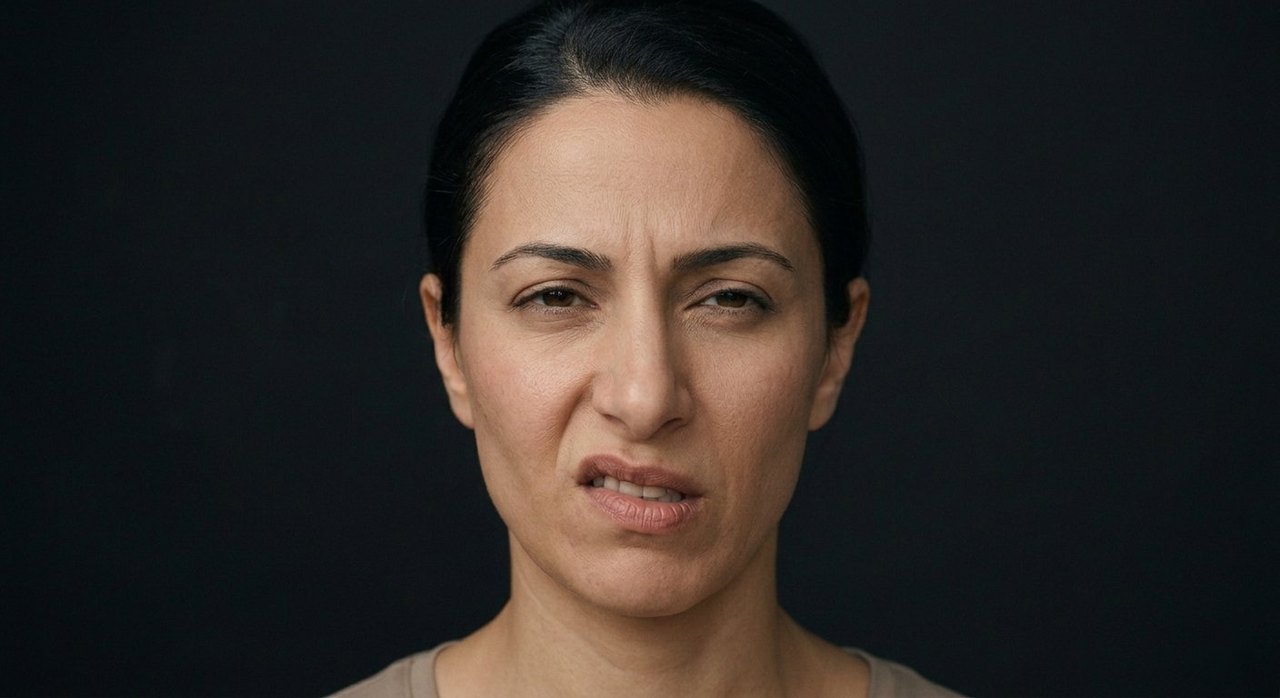
Scorn
Open, pointed contempt. You look down on someone.
Scorn is open, pointed contempt. You look down on someone. The chest holds cold distance. One corner of the mouth raises with a slight head tilt. The other has been placed beneath consideration, and the placement damages relationships.
Scorn pushed outward leaves a vacuum inward
Scorn is contempt that has gone public. You are now openly dismissive. This is sometimes necessary in confronting genuine bad faith, but it is a weapon best used sparingly. Scorn creates spectacle. It rewards the one delivering it and damages the relationship with anyone watching. People rarely forget being scorned. Even if the scorn was justified, the memory of the tone tends to outlast the memory of the content. If you are tempted to scorn someone, ask, will this actually serve my goal? Or will it just feel good for thirty seconds and cost me for years? Choose precision over scorn almost always. You will be taken more seriously.
"If you want to be taken seriously, behave seriously."
— Margaret Thatcher
Scorn has a distinctive body signature of dismissive elevation. The chest holds cold distance. The face shows the asymmetric expression characteristic of contempt: one corner of the mouth raised, sometimes with slight head tilt, often with the nose slightly raised. The voice carries particular dismissive quality, often with subtle mocking edge. The body holds itself in a way that suggests elevation above the scorned object: shoulders back, chin raised slightly. The state can be sustained for moments or longer, sometimes becoming a persistent orientation toward particular targets. Scorn is one of the emotions with the most reliable visible expression across cultures.
Scorn has been studied within research on contempt, particularly through Ekman's work identifying contempt as one of the basic emotions with universal facial expression (Ekman, 1992). The asymmetric facial expression (one corner of mouth raised) is consistent across cultures. Gottman's research on couples identified contempt, which includes scorn, as the most reliable predictor of divorce among the four behaviours he called the Four Horsemen of relationship apocalypse (Gottman, 1999). Research has consistently shown that scorn and contempt damage relationships more than other negative emotions, partly because of their hierarchical structure.

Scorn arises through specific conditions involving hierarchical orientation and dismissive judgement. Common patterns include:
Scorn is one of the more relationally damaging emotions and benefits from active attention. The following help.
Notice when scorn is operating
Scorn often operates without explicit recognition. Noticing the dismissive hierarchical orientation when it arises, before it shapes behaviour, supports the choice of whether to act from it. The recognition is the first step; without it, scorn often produces effects that the person would not endorse if examined.
Examine what is being elevated and dismissed
Scorn involves placing yourself above someone else. Examining what specifically you are elevating and dismissing often reveals patterns worth attending to. Sometimes the elevation is grounded in actual differences; often it reflects insecurity, group identification, or unexamined assumptions. The examination is often revealing.
Distinguish accurate assessment from hierarchical placement
Recognising that someone has done something poorly, made a mistake, or has limitations does not require the hierarchical placement that scorn involves. Accurate assessment can be made while still maintaining respect for the other as a person. Working toward accurate assessment without scorn typically produces better outcomes than either scornful judgement or refusing to assess.
Address scorn in close relationships specifically
Gottman's research identified contempt (which includes scorn) as the most reliable predictor of divorce. Scorn in close relationships warrants particular attention because of its damaging effects. Couples or family work that addresses contempt patterns often produces substantial relationship improvement. The scorn is workable when recognised.
If scorn has become a sustained orientation
Sustained orientations of scorn toward particular categories of people, including categories you encounter regularly, often reflect patterns worth examining. Sometimes the patterns reflect group identifications, sometimes defensive elevation from underlying insecurity, sometimes specific psychological structures. Therapeutic work that addresses these underlying patterns often makes scorn less pervasive and less damaging.
"Gottman's research on couples identified contempt, which includes scorn, as the most reliable predictor of divorce among the four behaviours he called the Four Horsemen of relationship apocalypse."
— A summary of Gottman's research on contempt in relationships
What is scorn?
Scorn is open, pointed contempt. You look down on someone. The body has been activated in a particular dismissive way, with the face showing the specific expression of considering the other beneath consideration. The chest holds cold distance. The face shows the asymmetric expression characteristic of contempt: one corner of the mouth raised, often with slight head tilt. There is a quality of looking down on what is being scorned, of having placed yourself above and the other beneath. Scorn specifically refers to the contemptuous dismissal that treats someone as beneath consideration, often combined with hierarchical orientation.
Where do people feel scorn in the body?
Scorn has a distinctive signature of dismissive elevation. The chest holds cold distance. The face shows the asymmetric expression characteristic of contempt: one corner of the mouth raised, sometimes with slight head tilt, often with the nose slightly raised. The voice carries particular dismissive quality, often with subtle mocking edge. The body holds itself in a way that suggests elevation above the scorned object: shoulders back, chin raised slightly. The state can be sustained for moments or longer, sometimes becoming a persistent orientation toward particular targets. Scorn is one of the emotions with the most reliable visible expression across cultures.
Why is scorn so damaging to relationships?
Gottman's research on couples identified contempt (which includes scorn) as the most reliable predictor of divorce among the four behaviours he called the Four Horsemen of relationship apocalypse. Several features make scorn particularly damaging: the hierarchical placement signals that the scorner has placed themselves above the scorned, which fundamentally undermines the equality that close relationships require; the dismissiveness signals that the scorned person is not worth full engagement; the contemptuous expression communicates these messages even when not verbalised. Other negative emotions including anger and disagreement do not have these specific features and are less damaging to relationships when expressed without scorn.
How is scorn different from disgust?
Disgust involves physical rejection response, often with stomach involvement and characteristic facial expression. Scorn is the dismissive contemptuous response, more cognitive than physical. A person can scorn without disgust (dismissive contempt without the physical response). The two can coexist, particularly with morally disgusting behaviour, but they are distinct emotions with different physical signatures. Disgust evolved primarily for protection from contamination; scorn evolved more for social hierarchy management. Ekman's research on basic emotions identified both as universal with characteristic facial expressions, but the expressions and the underlying functions are distinct.
How do you stop scorning people?
Several practices help. Noticing when scorn is operating, often without explicit recognition, supports the choice of whether to act from it; the recognition is the first step. Examining what is being elevated and dismissed often reveals patterns worth attending to, including unexamined assumptions, insecurity, or group identifications. Distinguishing accurate assessment from hierarchical placement supports better outcomes; recognising that someone has limitations does not require placing yourself above them. Addressing scorn in close relationships specifically warrants particular attention because of its damaging effects. When scorn has become a sustained orientation toward particular categories of people, working with the underlying patterns, often through therapy, often makes scorn less pervasive and less damaging.
- Ekman, P. (1992). An argument for basic emotions. Cognition and Emotion, 6(3-4), 169–200. https://www.tandfonline.com/doi/abs/10.1080/02699939208411068
- Gottman, J. M. (1999). The Marriage Clinic: A Scientifically Based Marital Therapy. W. W. Norton.
Scorn sits in the disgust family as one of its more relationally focused forms. It overlaps with contempt as the broader category, with disdain as a near-synonym, with derision when active expression is involved, with snobbery when class-based hierarchical orientation is central, and with what Ekman's research identified as one of the basic emotions with universal facial expression and what Gottman identified as the most damaging emotion in close relationships.
See where scorn sits among the other 402 emotions.
Open Scorn on the wheel