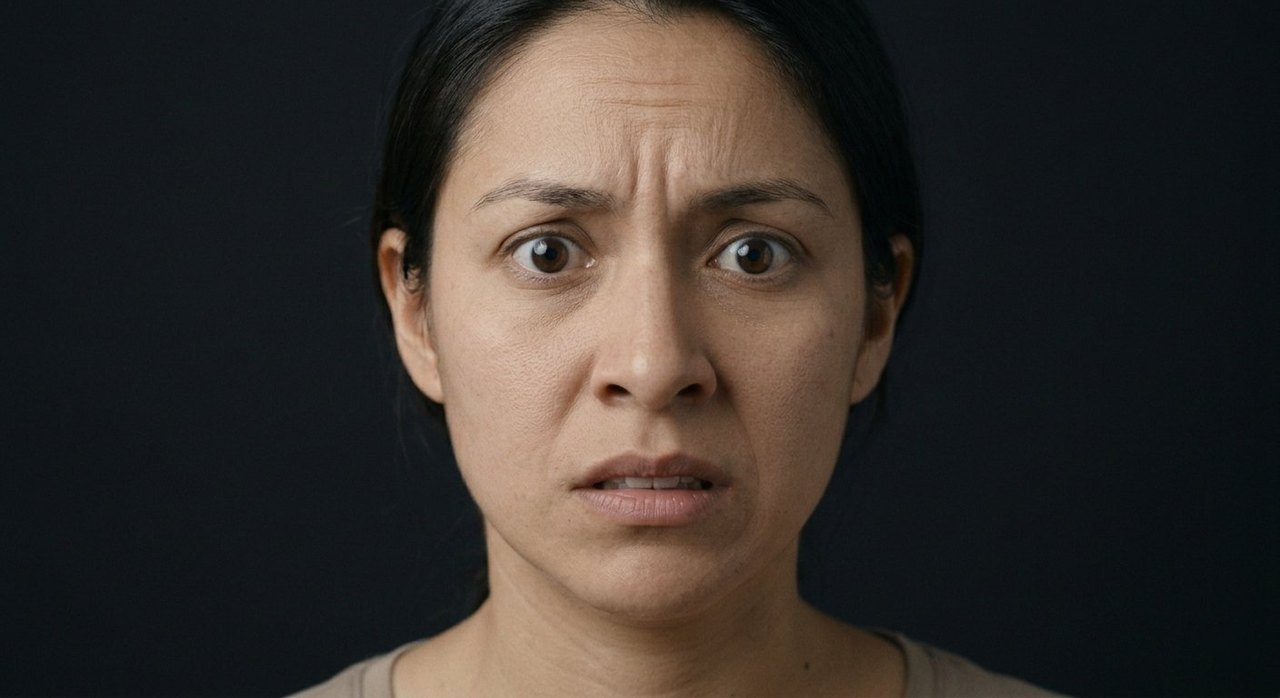
Fear
An alarm signal. Something threatens your safety.
Fear is the body's alarm that something threatens your safety. The heart speeds, the breath shortens, the senses sharpen. Energy moves to the muscles for fight, flight, or freeze. Unlike anxiety, fear has a present and specific object.
Fear is a question, not a verdict
Fear says, this might be dangerous. It does not say, this is dangerous. The work is to receive the signal without obeying it automatically. Most modern fear is about social risk, not physical risk. The risk of looking foolish. The risk of being rejected. The risk of being seen. These risks are real but rarely fatal. Notice when you are about to let fear make a decision. Pause. Ask, what is the actual worst case? Is it survivable? Almost always, yes. The fear was protecting you from something that did not need protecting against. Thank it. Then act anyway. Courage is not the absence of fear. It is the willingness to move with it.
"Do one thing every day that scares you."
— Eleanor Roosevelt
Fear produces one of the most coordinated full-body responses in the emotional repertoire. The face becomes alert, the head clears for action, the chest opens for faster breath, the stomach knots as digestion shuts down, and the limbs prepare to run or fight. Every change serves a single purpose: survival.
The fear response involves the amygdala triggering a cascade of physical changes within milliseconds: adrenaline release, heart rate increase, blood redirected from non-essential systems, pupils dilating, sweating to cool the body for sustained effort (LeDoux, 1996). The Nummenmaa body-mapping research found fear activates the chest, stomach, and head most strongly, with notable activation also reaching the limbs. This is the body preparing to act.

Fear exists because the body has a job to keep you alive. The trigger is rarely random. Common patterns include:
Fear responds well to specific practices. The body needs to confirm either that the threat is real and you can act, or that the threat is not actually present.
Move toward the body, not away
Fear lives in the body. Trying to think your way out of fear usually fails because thinking is too slow for the system fear is running on. Slow breathing, grounding through the feet, naming five things you can see: these reach the body directly and signal safety.
Name the actual fear specifically
Vague fear stays vague. Specific fear can be examined. 'I am afraid I will fail' is more workable than 'something is wrong'. Naming what you are actually afraid of often reduces its grip. The signal completes itself once articulated.
Test the danger gently
If the fear is of something that is not actually dangerous, gradual exposure helps the nervous system update. This is the basis of most evidence-based anxiety and phobia treatment. Avoiding the feared thing strengthens the fear. Approaching it slowly weakens it.
Distinguish productive fear from frozen fear
Productive fear gives energy to act: leave, fight, prepare. Frozen fear locks the body. If you find yourself unable to move, the response has tipped from useful to stuck. Movement of any kind, even small, often unsticks it.
If it is chronic
Fear that persists in the absence of threat, that returns to specific memories, or that limits daily life is worth taking to a therapist. Trauma-focused therapies including EMDR, prolonged exposure, and somatic experiencing have strong evidence. You do not have to live with fear that no longer serves you.
"Fear is wisdom in the face of danger. It is nothing to be ashamed of."
— Sherlock Holmes, by Arthur Conan Doyle, often quoted in trauma research
What is the difference between fear and anxiety?
Fear has a specific object that is present and threatening. Anxiety is fear without a clear target, often pointed at something that has not happened yet. Both produce similar bodily activation, but fear typically resolves when the threat passes. Anxiety can persist indefinitely because there is nothing concrete to either fight or flee from.
Where do people feel fear in the body?
Fear is one of the most full-body emotions. The chest tightens and the breath quickens, the stomach drops or knots, the head clears for action with sharpened senses, and the limbs prepare to run or fight. Some people feel cold, sweaty, or shaky. The whole system mobilises within seconds.
Is fear a bad emotion?
No. Fear is one of the most useful emotions humans have. It evolved to keep the body alive in the face of danger. The action a person takes when afraid can be helpful or unhelpful, but the feeling itself is information about something the body has registered as a threat. The work is to listen to fear without being run by it.
Why do I feel fear when nothing dangerous is happening?
The body cannot reliably distinguish between a real threat and a vividly imagined or remembered one. Past trauma, anticipatory thinking, and learned associations can all produce fear in safe situations. The fear is real even when the danger is not present. This is the territory of trauma and anxiety, both of which respond to specific therapies.
How do you stop being afraid?
You usually cannot stop fear directly. What you can do is help the body confirm that the situation is safe, or act effectively if it is not. Slow breathing, grounding, gradual exposure to feared things that are not actually dangerous, and therapy for chronic fear all work over time. Trying to override fear with willpower alone rarely succeeds.
- LeDoux, J. (1996). The Emotional Brain: The Mysterious Underpinnings of Emotional Life. Simon & Schuster.
- Nummenmaa, L., Glerean, E., Hari, R., & Hietanen, J. K. (2014). Bodily maps of emotions. Proceedings of the National Academy of Sciences, 111(2), 646–651. https://www.pnas.org/doi/10.1073/pnas.1321664111
- Foa, E. B., & Kozak, M. J. (1986). Emotional processing of fear: Exposure to corrective information. Psychological Bulletin, 99(1), 20–35. https://psycnet.apa.org/doi/10.1037/0033-2909.99.1.20
Fear sits at the centre of its family. The other entries are mostly distinguished by what is feared, how present the threat is, and how acute the response.
See where fear sits among the other 402 emotions.
Open Fear on the wheel