Horror
Shocked, revolted fear. Something deeply wrong.
Horror is shocked, revolted fear at something deeply wrong. The chest seizes, the stomach turns, the mind recoils. Fear combines with the recognition that what is witnessed should not exist. The wrongness is part of the experience.
Some things deserve to never be normalised
Horror is the right response to certain realities. Cruelty, atrocity, the sudden death of someone young. The recoil is moral, not weakness. The mistake is to seek emotional stability by talking yourself out of the horror. Some events are supposed to disturb you. The disturbance is the cost of being a person who has not become numb. Honour the horror by letting it move you. Then ask, what does this require of me? Sometimes nothing can be done. Sometimes a small thing can. Either way, the willingness to remain horrified, to refuse the comfort of detachment, is a form of moral aliveness. Stay horrified at what deserves it. The world needs people who still are.
"The opposite of love is not hate. It is indifference."
— Elie Wiesel
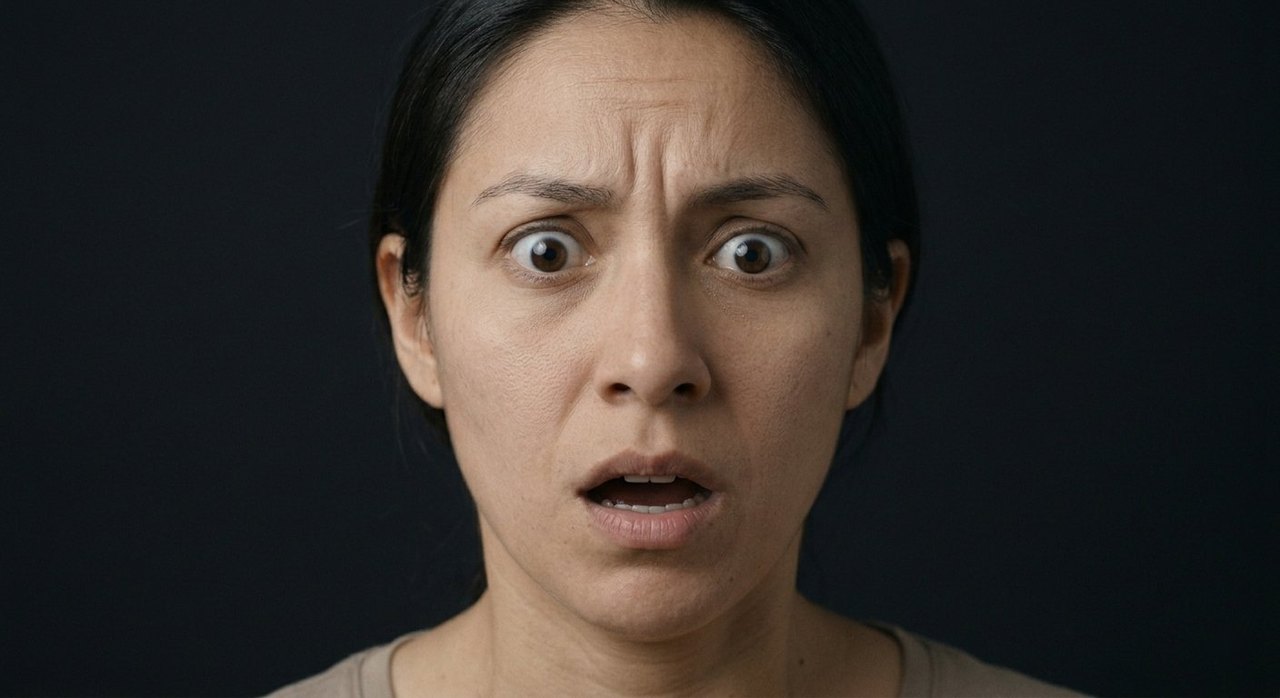
Horror has a distinctive body signature combining fear with revulsion. The chest seizes with fear. The stomach turns with revulsion. The face often shows a particular mouth-open, eyes-wide expression with the additional element of recoil. The body may freeze briefly then turn away. There is often a vocal response: a gasp, a cry, sometimes words. The combination of fear-pattern and disgust-pattern produces a body state distinct from either alone. The recoil is one of the defining features.
Research on horror as a distinct emotion is less developed than research on its components (fear and disgust), but the combination has been studied in contexts including witness-of-violence research, exposure to media, and certain forms of moral psychology. The body response combines features of both fear activation and disgust response, with measurable patterns in heart rate, facial muscles, and physiological markers. Horror appears to involve a particular kind of moral cognition that registers events as not just threatening but as fundamentally wrong.

Horror arises in specific conditions involving the witnessing of fundamental wrongness. Common patterns include:
Horror, particularly sustained horror, often warrants particular care because of its impact on the system.
Allow the response, do not suppress it
Horror is the body's appropriate response to genuine wrongness. Suppressing it often produces worse outcomes than letting it move through. The instinct to recoil, the impulse to cry out, the need to turn away. These are part of how the body processes what has been registered. Allowing them, in safe context, helps the processing.
Do not bear horror alone
Horror processed alone is more likely to become trauma than horror processed with support. Reaching out to people who can bear what you have witnessed, talking about what you saw or learned, sharing the response. The presence of others helps the system move through what it has registered.
Limit exposure to horrors you cannot do anything about
Modern media exposes people to horrors at unprecedented rates. The body responds to each one with some version of the horror response, even when there is nothing to be done. Limiting exposure to horrors you cannot affect is not denial or callousness; it is protection of the body's response capacity, which is finite.
Take action where action is possible
When horror arises in response to wrongs you can act on, action often helps move the response through. Donating, advocating, helping directly. The action does not have to be proportionate to the horror; the act of doing something often allows the body's response to find a channel rather than accumulating without resolution.
If horror has produced lasting effects
Sustained horror responses, particularly after exposure to severe events, can develop into trauma symptoms. If horror experiences continue to affect you significantly weeks or months later (intrusive thoughts, sleep disruption, persistent activation), professional support is appropriate. Trauma-focused therapies have good evidence for treating the lasting effects of horror experiences.
"Horror is fear plus the judgment that what you are witnessing should not exist. The body is responding to two things at once: the threat and the wrongness."
— A common framing in research on moral emotions
What is horror as an emotion?
Horror is shocked, revolted fear at something deeply wrong. The body responds with fear plus a particular quality of moral or aesthetic revulsion. It combines fear (the threat dimension) with the recognition that what is being witnessed should not exist (the moral dimension). Witnessing violence, atrocity, or anything that violates fundamental expectations of what should be possible often produces horror. The wrongness is essential to the experience; it is not just intense fear but fear plus judgment.
Where do people feel horror in the body?
Horror has a distinctive signature combining fear with revulsion. The chest seizes with fear. The stomach turns with revulsion. The face often shows a mouth-open, eyes-wide expression with the additional element of recoil. The body may freeze briefly then turn away. There is often a vocal response: a gasp, a cry, sometimes words. The combination of fear-pattern and disgust-pattern produces a body state distinct from either alone. The recoil is one of the defining features.
What is the difference between horror and disgust?
Disgust is revulsion without the fear component. Horror requires both. A person can be disgusted by something repulsive without being afraid (rotten food, certain smells). Horror requires the additional fear that the wrongness involves threat or harm. The distinction matters because moral revulsion alone is closer to disgust; moral revulsion plus fear is closer to horror. The body experiences differ accordingly: disgust produces turning away; horror produces the combination of recoil and freeze.
Can you become numb to horror?
Yes, through repeated exposure. People in professions that involve regular exposure to horrible events (emergency workers, war reporters, certain medical specialists) often develop reduced horror responses as a protective adaptation. This is sometimes called secondary traumatic stress or compassion fatigue. The numbing can be functional in the short term but often has costs over time, including reduced capacity for normal emotional response in other contexts. Recovery usually requires reduced exposure and support to restore baseline.
How do you cope with witnessing something horrible?
The most important factor is usually whether you process it alone or with support. Horror processed alone is more likely to become lasting trauma; horror processed with trusted people, with the response allowed and witnessed, is more likely to move through. Allowing the body's response rather than suppressing it, limiting exposure to repeated horror beyond what you can process, and taking action where action is possible all help. Sustained effects (intrusive thoughts, sleep disruption, persistent activation weeks later) warrant professional support, which is effective.
- Herman, J. L. (1992). Trauma and Recovery. Basic Books.
- Litz, B. T., Stein, N., Delaney, E., Lebowitz, L., Nash, W. P., Silva, C., & Maguen, S. (2009). Moral injury and moral repair in war veterans: A preliminary model and intervention strategy. Clinical Psychology Review, 29(8), 695–706. https://www.sciencedirect.com/science/article/abs/pii/S0272735809001172
Horror sits in the fear family as one of its most complex forms because of the moral and aesthetic dimensions. It overlaps with terror at high intensity, with disgust in the revulsion component, and with what some traditions call moral injury when the horror involves one's own actions or witnessed wrongs that the system cannot integrate.
See where horror sits among the other 402 emotions.
Open Horror on the wheel