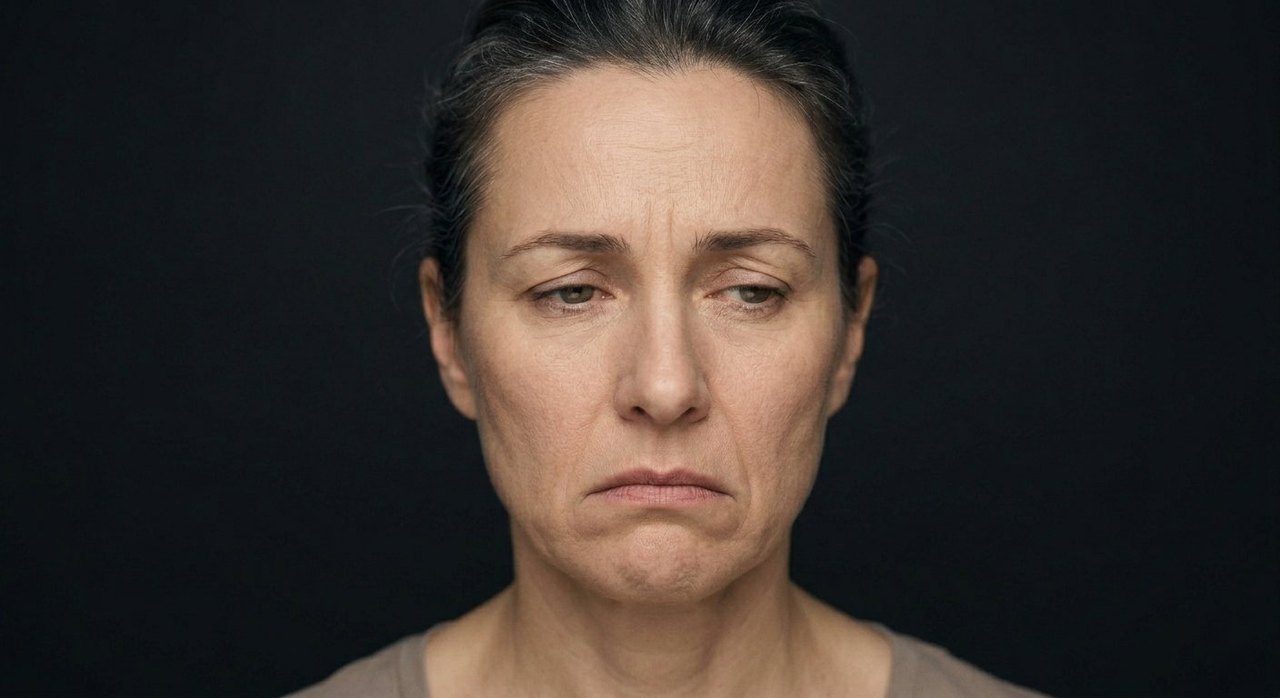
Powerlessness
Painful certainty that your actions will change nothing.
Powerlessness is the painful certainty that your actions will change nothing. The body carries a weighted stuckness and the limbs feel useless. Effort does not register on what you try to affect. Unlike acute helplessness, it can persist for long periods.
Powerlessness is sometimes real. It is still not permanent.
Real powerlessness happens. The situation is larger than you. Addiction. Grief. An illness. A regime. In this moment, you cannot change the outcome. The spiritual move here is to stop spending energy on what you cannot change and direct it to what you still can. Your response. Your attention. The person next to you. The next small action you take despite the futility. Powerlessness over the outcome is not powerlessness over yourself. Keep the second power. It is the only one you ever really had, in any situation. It is enough.
"We admitted we were powerless over our addiction, that our lives had become unmanageable."
— First step of the Twelve Steps
Powerlessness has a distinctive body signature of weighted ineffectiveness. The limbs feel useless. The chest carries sustained low-grade weight. The voice may become quieter or stop attempting to be heard. There is often a particular kind of internal collapse, as if the muscles that would normally support action have given up over time. Sleep can become disturbed by the sustained low-grade activation of the situation. Energy directed at problems has been withdrawn. The body holds itself in a way that suggests sustained absence of effective agency, often visible to others as a particular kind of resignation in posture and presence.
Powerlessness has been studied within research on learned helplessness, locus of control, and what some researchers call agency. Seligman's foundational work on learned helplessness has direct relevance, as does Rotter's work on internal versus external locus of control (Rotter, 1966). Research has shown that perceived control, separate from actual control, has significant effects on psychological and physical well-being. People who believe their actions matter, even when objective control is limited, tend to fare better than people with similar circumstances who believe their actions do not matter. The belief itself appears to be a meaningful variable.

Powerlessness arises through specific conditions that have demonstrated, often repeatedly, that effort does not produce change. Common patterns include:
Powerlessness is workable when its specific nature is understood. The following help.
Distinguish areas of genuine limit from areas of retained agency
Powerlessness usually extends beyond what the specific circumstances warrant. The original powerlessness may be accurate (you cannot change specific things) but it spreads to areas where you do retain agency. Specifically identifying what is and is not within your influence often reveals more remaining agency than the powerless state suggested.
Take small actions where action is possible
Powerlessness often dissolves through experience that effort matters in some area, however small. Taking small actions in areas where action does produce results gradually rebuilds the sense of agency that powerlessness has dimmed. This is essentially restoring learned agency to replace learned helplessness, through experience rather than just through thinking differently.
Address the conditions producing powerlessness where possible
Some powerlessness reflects conditions that can be changed: leaving abusive situations, addressing health conditions, working on financial circumstances. Where the conditions producing powerlessness can be changed, that change is usually more effective than working with the felt sense alone. The felt sense often shifts when conditions shift.
Work with childhood patterns when relevant
Powerlessness rooted in childhood conditions often requires specific therapeutic work because the underlying patterns have been operating since formative periods. Therapy approaches that address developmental trauma, attachment patterns, and learned helplessness can produce significant change in adult powerlessness patterns that have not responded to other interventions.
If powerlessness has generalised and become disabling
Sustained powerlessness across many areas of life, particularly when accompanied by depression symptoms, often warrants professional support. The state is treatable, and the treatments differ from those for ordinary depression in important ways. Professional support is appropriate when powerlessness has stopped responding to ordinary efforts to act and has become a sustained orientation rather than response to specific circumstances.
"Perceived control matters separately from actual control. People who believe their actions matter, even when objective control is limited, tend to fare better than people with the same circumstances who believe their actions do not matter."
— A common finding in research on locus of control
What is powerlessness?
Powerlessness is the painful certainty that your actions will change nothing. The body carries a particular kind of weighted stuckness. The limbs feel useless. There is a quality of trying without effect, of effort that does not register on what you are trying to affect. It is one of the more psychologically demanding states because it combines awareness of a problem with the felt inability to do anything about it. Unlike acute helplessness, powerlessness often persists over long periods and can become a sustained orientation toward life.
Where do people feel powerlessness in the body?
Powerlessness has a distinctive signature of weighted ineffectiveness. The limbs feel useless. The chest carries sustained low-grade weight. The voice may become quieter or stop attempting to be heard. There is often a particular kind of internal collapse, as if the muscles that would normally support action have given up over time. Sleep can become disturbed by the sustained low-grade activation of the situation. The body holds itself in a way that suggests sustained absence of effective agency.
What is the difference between powerlessness and helplessness?
Helplessness is the acute felt inability to affect a specific situation. Powerlessness is the sustained felt absence of agency across many situations. A person can be helpless about specific circumstances while retaining sense of power in other areas. Powerlessness is the more pervasive form that extends across life areas rather than concentrating on specific situations. The distinction matters because the responses differ. Specific helplessness can often be worked with by identifying retained agency in adjacent areas. Generalised powerlessness usually requires more substantial work.
Can you recover from powerlessness?
Yes, though it typically takes time and often benefits from professional support, particularly when powerlessness has been long-standing or rooted in childhood conditions. Recovery usually involves distinguishing areas of genuine limit from areas of retained agency, taking small actions in areas where action is possible (this gradually rebuilds the sense of agency), addressing the conditions producing powerlessness where possible, and for powerlessness rooted in early experiences, therapy approaches that address developmental trauma and attachment patterns. The state is treatable but the work usually takes time.
Is some powerlessness sometimes accurate?
Yes. Some life circumstances actually produce sustained limited agency: poverty, oppression, severe chronic illness, captivity, abusive relationships from which escape is genuinely difficult. Powerlessness in these conditions is partly accurate to circumstances. The work is usually less about restoring agency in the specific limiting circumstances (often impossible) and more about restoring agency in areas that remain workable, and about addressing the systemic conditions where possible. However, the felt accuracy of powerlessness is usually larger than the actual scope of limit; people in sustained powerlessness usually underestimate available agency in adjacent areas.
- Rotter, J. B. (1966). Generalized expectancies for internal versus external control of reinforcement. Psychological Monographs: General and Applied, 80(1), 1–28. https://psycnet.apa.org/doi/10.1037/h0092976
- Maier, S. F., & Seligman, M. E. P. (2016). Learned helplessness at fifty: Insights from neuroscience. Psychological Review, 123(4), 349–367. https://psycnet.apa.org/doi/10.1037/rev0000033
Powerlessness sits in the negative family as one of its more sustained states. It overlaps with helplessness when concentrated on specific situations, with hopelessness when the powerlessness has extinguished belief in any possibility, with resignation when the response has become acceptance of giving up, and with what positive psychology research treats as the inverse of self-efficacy.
See where powerlessness sits among the other 402 emotions.
Open Powerlessness on the wheel