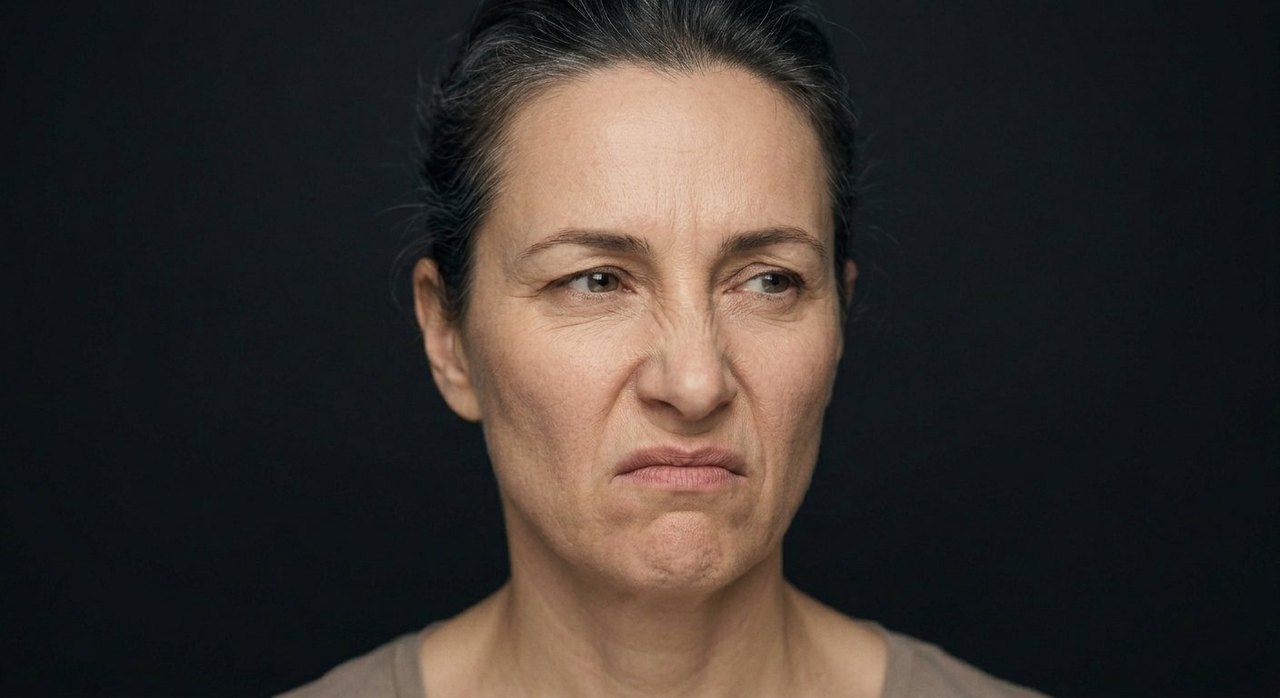
Moral disgust
Revulsion at an action that violates moral norms.
Moral disgust is revulsion at an action that violates moral norms. The nose wrinkles, the stomach reacts, the face pulls back. The judgement operates through the body's disgust system, not abstract reasoning alone. The behaviour feels repugnant beyond mere disapproval.
Disgust at wrong behaviour keeps you human
Moral disgust is the gut response to witnessing genuine wrongdoing. It is not prudishness. It is the body registering that a line has been crossed. Pay attention to it. The danger of modern life is that we are exposed to so much cruelty, in media and online, that the disgust response starts to fatigue. Things that should appall us become background. Guard your capacity to be appalled. Consume less of the material that is designed to trade on it. Save your disgust for situations where it can do useful work. Let it fuel your protest or your refusal. Do not let it become entertainment.
"The only thing necessary for the triumph of evil is for good men to do nothing."
— Edmund Burke
Moral disgust has a distinctive body signature shared with physical disgust. The chest tightens. The face pulls back, often with the specific disgust expression: nose wrinkled, upper lip raised. The stomach may produce some reaction, sometimes with mild nausea. The voice may carry particular disgusted quality. The body recoils from contact with the morally disgusting source, even when contact is only conceptual rather than physical. The state can be brief or sustained; sustained moral disgust toward particular groups, behaviours, or categories often becomes part of how moral judgements are organised.
Moral disgust has been extensively studied, particularly through Haidt's foundational research on moral psychology (Haidt, 2012). His work identified disgust as one of the moral foundations, with measurable activation in response to perceived purity violations and other moral transgressions. Research has shown that moral disgust uses many of the same neural and physiological systems as physical disgust, supporting the view that the moral disgust system co-opts the contamination-avoidance system for moral judgement. Cultural variation in what triggers moral disgust is substantial, though core categories (incest, certain bodily violations, betrayal) produce response across most cultures.

Moral disgust arises through specific conditions involving perceived moral violations. Common patterns include:
Moral disgust is one of the more functionally significant moral emotions but benefits from examination. The following help.
Recognise moral disgust as one input, not final word
Moral disgust is meaningful input but should not be treated as conclusive moral judgement. Some moral disgust responses track actual moral violations; some reflect cultural reaction to unfamiliarity. Recognising moral disgust as one input among others, including reasoning and empathy, supports better moral judgement than treating disgust as definitive.
Examine whether disgust tracks actual harm
Genuine moral violations often involve harm to others. Examining whether your moral disgust responds to actual harm, or to something else (cultural unfamiliarity, personal preference, group identification), supports more accurate moral judgement. The examination is often revealing: some moral disgust responses dissolve when actual harm is examined; others intensify when the harm becomes clearer.
Distinguish moral disgust from social discomfort
Some apparent moral disgust is actually social discomfort with unfamiliar practices or people. The distinction matters because moral disgust toward unfamiliar but not harmful practices can produce significant social damage including discrimination and unjustified hostility. Working toward accurate moral judgement involves distinguishing these.
Allow moral disgust toward genuine wrongs
Some moral disgust tracks genuine wrongs that warrant strong moral response. Allowing moral disgust toward cruelty, betrayal, exploitation, and similar wrongs supports good moral functioning. The work is not to eliminate moral disgust but to direct it toward what actually warrants the response.
If moral disgust has become disabling or destructive
Sustained intense moral disgust toward many things or groups, particularly when accompanied by patterns of social damage or sustained negative orientation, may warrant attention. Some sustained moral disgust patterns reflect particular psychological structures including obsessive-compulsive patterns around purity; some reflect group-based prejudices that warrant their own attention. Working with these patterns often requires distinguishing what is actually morally wrong from what produces disgust through other mechanisms.
"Moral disgust uses many of the same neural and physiological systems as physical disgust, supporting the view that moral disgust co-opts the contamination-avoidance system for moral judgement."
— A summary of Haidt's research on moral disgust
What is moral disgust?
Moral disgust is revulsion at an action that violates moral norms. The body has been activated by what someone has done in a way that produces specifically disgust-like response: nose wrinkles, stomach reacts, face shows the characteristic disgust expression. The chest tightens. The face pulls back. There is a quality of moral judgement that operates through the body's disgust system rather than through abstract reasoning alone, of finding behaviour repugnant in ways that go beyond mere disapproval. Moral disgust specifically refers to disgust-system activation in response to moral violations, often with the same body signatures as physical disgust.
Where do people feel moral disgust in the body?
Moral disgust has a distinctive signature shared with physical disgust. The chest tightens. The face pulls back, often with the specific disgust expression: nose wrinkled, upper lip raised. The stomach may produce some reaction, sometimes with mild nausea. The voice may carry particular disgusted quality. The body recoils from contact with the morally disgusting source, even when contact is only conceptual rather than physical. The state can be brief or sustained; sustained moral disgust toward particular groups, behaviours, or categories often becomes part of how moral judgements are organised.
How is moral disgust different from anger?
Anger involves activation toward perceived wrong with mobilisation for response. Moral disgust is the disgust-system activation that produces recoil rather than mobilisation. A person can be morally disgusted without anger (recoil without mobilisation for response). The two can coexist when behaviour is both morally disgusting and warrants active response, but they are distinct emotions with different action tendencies. Research on moral emotions has distinguished these as serving different functions: anger mobilises toward addressing the wrong; moral disgust marks the wrong for avoidance. Both can be appropriate responses to moral violations but operate differently.
Why do moral wrongs sometimes physically disgust you?
Research has shown that moral disgust uses many of the same neural and physiological systems as physical disgust, supporting the view that the moral disgust system co-opts the contamination-avoidance system for moral judgement. The physical disgust system evolved to prevent contact with sources of contamination including disease and harmful substances; moral disgust appears to have developed by extending this avoidance system to social and moral violations. This is why moral wrongs can produce real physical responses including nausea, facial expression changes, and the urge to recoil from contact. The shared physiology is one of the more interesting features of moral disgust and is part of why it operates as embodied response rather than purely abstract judgement.
Is moral disgust always a reliable moral judgement?
No, and this matters significantly. Some moral disgust responses track actual moral violations; some reflect cultural reaction to unfamiliarity, group-based prejudice, or other factors that may not involve genuine moral wrong. Cultural variation in what triggers moral disgust is substantial; what produces moral disgust in one cultural context may produce no such response in another, even when the actual moral wrongness is the same or different. Examining whether your moral disgust tracks actual harm, or responds to something else like cultural unfamiliarity or group identification, supports more accurate moral judgement. The work is not to eliminate moral disgust but to recognise it as one input among others, including reasoning and empathy, and to direct it toward what actually warrants the response.
- Haidt, J. (2012). The Righteous Mind: Why Good People Are Divided by Politics and Religion. Pantheon Books.
Moral disgust sits in the negative family as one of its most morally engaged forms. It overlaps with disgust as the broader category, with contempt when hierarchical dismissal is added, with moral outrage when active anger combines, with what Haidt's moral foundations theory identified as one of the core moral domains, and with what cultural anthropology has documented as widely shared across cultures with substantial cultural variation in specific triggers.
See where moral disgust sits among the other 402 emotions.
Open Moral disgust on the wheel