Wabi-sabi
Japanese: finding beauty in imperfection and transience.
Wabi-sabi is finding beauty in imperfection and transience. The Japanese orientation names this quiet appreciation. Weathered, asymmetric, or incomplete things draw a particular response. The imperfection is not just acceptable; it is part of the beauty.
The cracks are not the problem. They are the story.
Wabi-sabi is the Japanese appreciation of beauty that is imperfect, impermanent, and incomplete. The old bowl with the crack. The weathered wood. The garden that is slightly overgrown. Western aesthetics prizes the new, the symmetrical, the finished. Wabi-sabi points in the opposite direction. The honest truth is that everything is imperfect, impermanent, and incomplete, including you. You can fight this or you can find it beautiful. Finding it beautiful is a relief. You no longer have to hide your cracks. The cracks are where the light gets in. The tea bowl is more valuable for having been mended than it was before it broke.
"There is a crack in everything. That's how the light gets in."
— Leonard Cohen
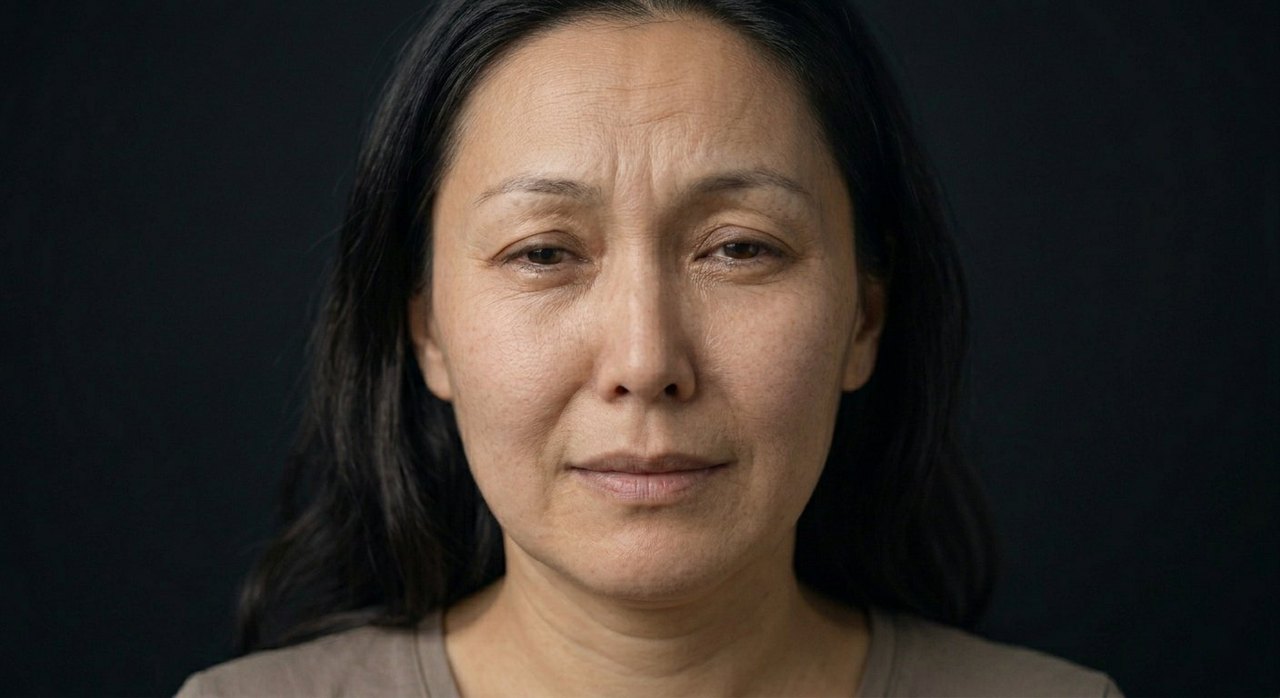
Wabi-sabi has a distinctive body signature of quiet aesthetic appreciation. The chest carries a particular soft settling. The eyes hold what they are looking at with sustained attention. The face is gentle and absorbed. There is no excitement, no peak response: just a felt recognition of something beautiful in a way that includes its imperfection or weathered quality. The body slows down to receive the impression. Unlike awe or excitement, wabi-sabi is a sustained mild positive state that can be lived in rather than experienced briefly.
Research on wabi-sabi specifically is limited but it overlaps with growing research on aesthetic emotions and on what some researchers call eudaimonic well-being: the kind of well-being that comes from meaningful engagement rather than pleasure (Ryff, 2014). The Japanese aesthetic tradition has been studied as offering distinct positive emotion categories that Western psychology has only recently begun to recognise. The capacity for wabi-sabi appreciation appears trainable: cultures and individuals that develop the sensibility show measurably different aesthetic responses than those that have not. The body benefits include reduced anxiety responses to imperfection and increased capacity for sustained mild positive states.

Wabi-sabi appreciation arises in specific conditions when the body has been trained to recognise the particular kinds of beauty it values. Common patterns include:
Wabi-sabi appreciation can be cultivated even outside the cultures that developed it. The following practices help.
Spend time with objects that have aged well
Old buildings, weathered wood, antique objects that have been used rather than preserved. The body learns to see the particular beauty of well-aged things by being around them. People who spend most of their time with new manufactured objects often have less developed wabi-sabi sensibility, simply because the training is absent.
Buy fewer things, choose them carefully, and let them age
The Western consumer pattern of constantly replacing objects prevents the development of wabi-sabi sensibility because objects never get to age into their beauty. Choosing fewer, better objects and letting them develop patina over years produces both better objects and the trained eye that sees what is beautiful about them.
Resist the cultural pressure toward visible perfection
Western consumer culture, social media, and many professional environments push toward visible perfection. The smoothed face, the perfect surface, the absence of marks of process. Resisting this pressure, in your own appearance, in your home, in your work, often supports the development of wabi-sabi orientation more broadly.
Engage with traditional Japanese arts when possible
Tea ceremony, traditional pottery, Japanese gardens, certain forms of architecture. These arts have developed wabi-sabi as an explicit orientation over centuries. Direct engagement with them, even briefly, often shifts the sensibility in ways that reading about wabi-sabi cannot.
Notice what already moves you in this direction
Most people have some pre-existing wabi-sabi sensibility: things they love that have wabi-sabi qualities even though they may not have used the word. Identifying these and building on them often produces more developed orientation more quickly than starting from scratch with new principles.
"Wabi-sabi is not just acceptance of imperfection. It is the recognition that imperfection is often where beauty actually lives. The perfect object is rarely the most beautiful one."
— A theme that recurs in Japanese aesthetic philosophy
What does wabi-sabi mean?
Wabi-sabi is a Japanese aesthetic and philosophical orientation that finds beauty in imperfection, asymmetry, and the marks of time and use. Wabi originally referred to the loneliness of living in nature, developing to include simplicity and austerity. Sabi refers to the beauty that comes with age, patina, and weathering. Together they form an orientation that has shaped Japanese art, tea ceremony, architecture, and ordinary life. The orientation has become widely interesting in Western cultures that have built much of their aesthetic on perfection and the new.
Where do people feel wabi-sabi in the body?
Wabi-sabi has a distinctive signature of quiet aesthetic appreciation. The chest carries a particular soft settling. The eyes hold what they are looking at with sustained attention. The face is gentle and absorbed. There is no excitement, no peak response: just a felt recognition of something beautiful in a way that includes its imperfection or weathered quality. Unlike awe or excitement, wabi-sabi is a sustained mild positive state that can be lived in rather than experienced briefly.
Is wabi-sabi just accepting imperfection?
No, it makes a stronger claim. Acceptance of imperfection suggests tolerating what is less than perfect. Wabi-sabi holds that imperfection is often where beauty actually lives, not just where it can be found despite the flaws. A weathered tea bowl is not beautiful despite its cracks; the cracks are part of what makes it beautiful. The shift from tolerance to genuine aesthetic appreciation is significant. Wabi-sabi also requires aesthetic discernment: it appreciates particular kinds of imperfection (the patina of age, the asymmetry of natural growth, the marks of skilled use), not lazy imperfection or careless work.
Can non-Japanese people understand wabi-sabi?
Yes, though the depth of the cultural form is harder to fully reach outside Japan. Most non-Japanese people have some pre-existing wabi-sabi sensibility: things they love that have wabi-sabi qualities even without using the word. This can be developed through spending time with objects that have aged well, buying fewer things and letting them age, resisting the cultural pressure toward visible perfection, and engaging with traditional Japanese arts when possible. The trained sensibility develops over years, but real appreciation is widely accessible.
How is wabi-sabi different from minimalism?
Wabi-sabi has minimalist tendencies but is not the same as minimalism. Minimalism emphasises reduction and simplicity as primary values. Wabi-sabi emphasises naturalness and the beauty of process, which often produces simplicity but is not reducible to it. A wabi-sabi space can include more than a minimalist space if the additions have the right quality (weathered, hand-made, naturally aging). The orientations overlap but have different underlying values. Minimalism is about how much. Wabi-sabi is about what kind.
- Koren, L. (1994). Wabi-Sabi for Artists, Designers, Poets & Philosophers. Imperfect Publishing.
- Juniper, A. (2003). Wabi Sabi: The Japanese Art of Impermanence. Tuttle Publishing.
- Ryff, C. D. (2014). Psychological well-being revisited: Advances in the science and practice of eudaimonia. Psychotherapy and Psychosomatics, 83(1), 10–28. https://www.karger.com/Article/Abstract/353263
Wabi-sabi sits in the untranslatable family as one of the most influential Japanese aesthetic concepts. It overlaps with mono no aware (the pathos of impermanence), with serenity in the felt baseline state it produces, and with what Western traditions sometimes call the picturesque when the appreciation is for weathered or natural-looking landscapes.
See where wabi-sabi sits among the other 402 emotions.
Open Wabi-sabi on the wheel