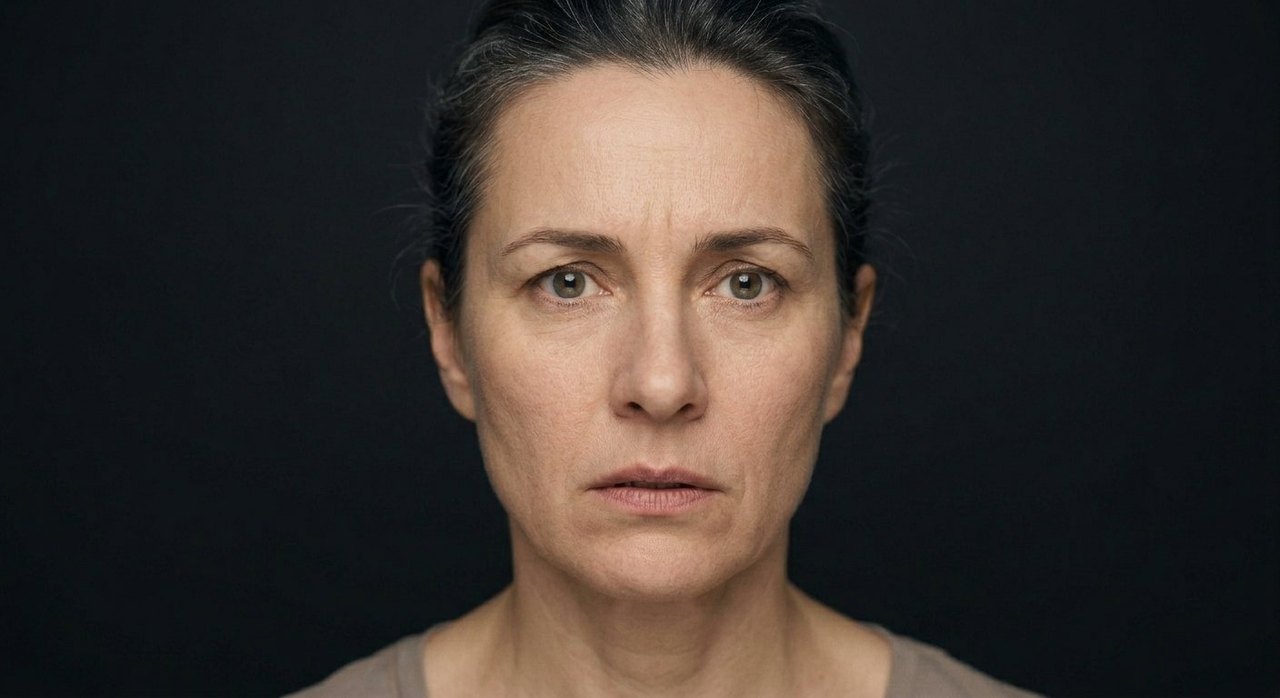
Turmoil
Churning inner chaos. Multiple emotions at war.
Turmoil is churning inner chaos, multiple emotions at war. The chest is restless and the breath uneven. No single feeling settles before another rises to displace it. The system holds contradictions it cannot integrate into one response.
Do not make decisions inside the storm
Turmoil is the state of multiple feelings at war inside you at once. Grief and relief. Love and anger. Hope and terror. The instinct is to resolve the tension by picking one. Do not, not yet. The turmoil is the honest response to a complicated situation. Wait for the storm to settle before you decide anything important. In the meantime, eat. Sleep. Keep small routines. Tell one trusted person what is happening. The turmoil will subside. What remains afterwards will be clearer. That is the time to act. The decisions made inside the storm are almost always the ones you regret.
"No feeling is final."
— Rainer Maria Rilke
Turmoil has a distinctive body signature of churning instability. The chest is restless, with feelings rising and falling rapidly. The breath is uneven. The face often shows changing expressions, sometimes contradicting each other within minutes. The voice may shift in tone and content unpredictably. The body holds itself in a way that suggests tension without clear direction, often with restless movement that does not resolve into purposeful action. Sleep is often significantly affected; turmoil interferes with the settling needed for sleep. The state can be sustained over days or weeks during difficult life events, often with cumulative exhausting effects.
Turmoil has been studied within research on emotional conflict, ambivalence, and mixed emotions. Larsen and McGraw's work on mixed emotions has shown that humans can experience genuinely opposed emotions simultaneously, contrary to earlier models that treated emotions as occurring one at a time (Larsen & McGraw, 2011). Research on emotional ambivalence has documented its effects on decision-making and well-being, including the cognitive load that sustained mixed emotional states impose. The capacity to tolerate turmoil without acting impulsively to resolve it appears to be partly developable through specific practices.

Turmoil arises through specific conditions involving competing emotional pulls. Common patterns include:
Turmoil benefits from being worked with rather than rushed to resolution. The following help.
Allow the multiplicity without forcing resolution
The instinct to resolve turmoil quickly often produces premature decisions or suppression of legitimate competing concerns. Allowing multiple feelings to be present without immediately picking one often supports better resolution than rushed integration. Real turmoil typically reflects real complexity that warrants time.
Name what the competing feelings actually are
Turmoil often operates as undifferentiated churning. Writing or speaking out the specific competing feelings, what each is responding to, what each cares about, often clarifies the situation. The clarification does not necessarily resolve the turmoil but makes it more workable.
Address what you can while turmoil continues
Sustained turmoil often requires time to resolve, but waiting for resolution before any action often produces additional difficulty. Addressing what can be addressed (sleep, basic needs, immediate decisions that do not require resolved feelings) while turmoil continues supports better functioning than treating turmoil as a barrier to all action.
Get support from others who can hold complexity
Talking with others who can engage with the actual complexity without rushing you toward resolution often helps. Some people respond to others' turmoil by trying to fix it through quick advice; others can hold the complexity. Choosing supports that match what turmoil actually requires often produces better results.
If turmoil has become sustained or disabling
Sustained turmoil that has produced significant impairment, sleep disturbance over weeks, or substantial difficulty functioning may warrant professional support. Therapy can help work through complex emotional situations that have not resolved with time. When turmoil accompanies major life transitions or trauma responses, specialised support is often particularly helpful.
"Research on mixed emotions has shown that humans can experience genuinely opposed emotions simultaneously. Sustained mixed emotional states impose cognitive load and affect decision-making."
— A summary of research on emotional ambivalence and mixed emotions
What is turmoil?
Turmoil is churning inner chaos. Multiple emotions at war. The body has been pulled in different directions at once, with competing feelings that do not resolve into a single response. The chest is restless. The breath is uneven. There is a quality of being unable to settle into any one feeling because others rise to displace it, of holding contradictions that the system cannot integrate. Turmoil specifically refers to the state of competing feelings that do not resolve, often with rapid alternation between very different emotional positions. The multiplicity is essential.
Where do people feel turmoil in the body?
Turmoil has a distinctive signature of churning instability. The chest is restless, with feelings rising and falling rapidly. The breath is uneven. The face often shows changing expressions, sometimes contradicting each other within minutes. The voice may shift in tone and content unpredictably. The body holds itself in a way that suggests tension without clear direction. Sleep is often significantly affected. The state can be sustained over days or weeks during difficult life events, often with cumulative exhausting effects.
How is turmoil different from anxiety?
Anxiety involves anticipatory distress about possible problems. Turmoil involves competing current feelings that do not resolve. A person can be in turmoil without anxiety (multiple current feelings at war without anticipatory worry). The two can coexist but they are distinct: anxiety scans forward; turmoil is about the current internal division. The distinction matters because the responses differ. Anxiety often responds to addressing what is being anticipated; turmoil often responds to working with the multiple competing feelings rather than trying to resolve them all at once.
Why does it feel like I'm being pulled in different directions?
Research on mixed emotions has shown that humans can experience genuinely opposed emotions simultaneously, contrary to earlier models. The felt experience of being pulled in different directions usually reflects real complexity rather than personal deficiency. Major life decisions with significant trade-offs, conflicts between obligation and desire, conflicting attachments to people or commitments, sustained instability or uncertainty all reliably produce this experience. The turmoil reflects the actual structure of the situation; the felt warring is appropriate response to genuinely competing legitimate concerns. Working with turmoil typically involves acknowledging the complexity rather than forcing premature resolution.
How do you stop feeling so torn?
Several practices help. Allowing the multiplicity without forcing resolution often supports better resolution than rushed integration; real turmoil typically reflects real complexity that warrants time. Naming what the competing feelings actually are, including what each is responding to and what each cares about, often clarifies the situation. Addressing what you can while turmoil continues supports better functioning than treating turmoil as a barrier to all action. Getting support from others who can hold complexity, rather than those who rush you toward resolution, often helps. When turmoil has become sustained or disabling, particularly when accompanied by sleep disturbance over weeks or substantial difficulty functioning, professional support is appropriate.
- Larsen, J. T., & McGraw, A. P. (2011). Further evidence for mixed emotions. Journal of Personality and Social Psychology, 100(6), 1095–1110. https://psycnet.apa.org/doi/10.1037/a0021846
Turmoil sits in the negative family as one of its more complex and structurally distinct forms. It overlaps with ambivalence when the focus is on competing positions, with distress as the broader category of negative activation, with chaos when the experience involves more extreme disorganisation, with what mixed emotion research has identified as a meaningful psychological state with specific predictors and effects, and with what life transitions research has identified as a common feature of major change.
See where turmoil sits among the other 402 emotions.
Open Turmoil on the wheel