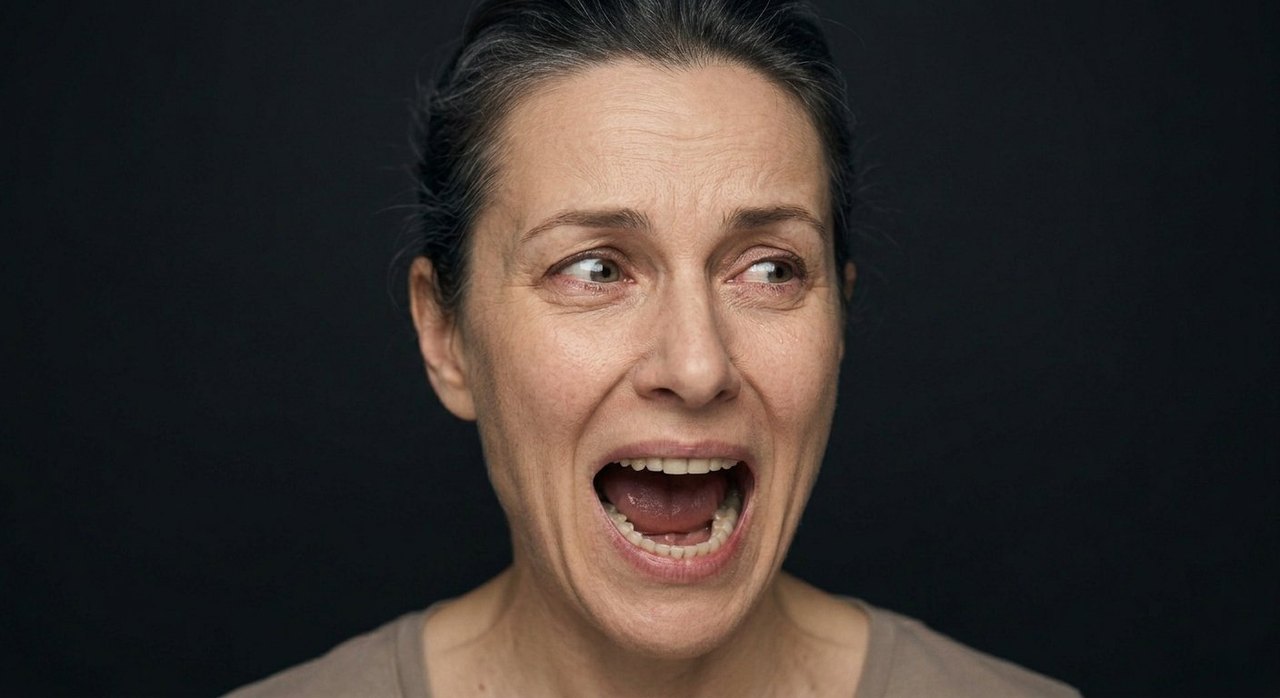
Hysteria
Uncontrollable emotional excess. Laughing or crying wildly.
Hysteria is uncontrollable emotional excess, laughing or crying wildly. The chest convulses and control is lost. The response has its own momentum and exceeds containment. Ordinary regulation cannot return to you while the state still continues.
When the system overflows, the only answer is to let it
Hysteria is the uncontrolled emotional release of pressure that has built up beyond the body's capacity to contain. The wild laughing. The uncontrollable crying. It looks undignified and it is often exactly the right thing. The alternative, which is to continue suppressing, usually produces worse outcomes. If hysteria comes, let it come, in a safe place, with someone if possible. Afterwards, you will be exhausted and calmer. This is the purpose. Do not be embarrassed. The body needed to do this. It has, and now you can rejoin the world in a more regulated state. The eruption was the cure, not the problem.
"There is no coming to consciousness without pain."
— Carl Jung
Hysteria has a distinctive body signature of overwhelmed emotional excess. The chest convulses with the response. The breath becomes irregular and rapid. The face shows particular intense expression that may shift between extremes. The voice often loses control with wailing, sobbing, or wild laughter. The body may shake or convulse with the response. The body holds itself in a way that suggests being taken over by what is occurring: movements may be uncontrolled, attention narrows to the immediate emotional experience. The state typically subsides as the underlying activation reduces, though severe forms may persist longer.
Hysteria has a complex history in clinical contexts, having been used historically as diagnostic category that has been substantially revised. The term originated in ancient Greek medicine and was extensively used in 19th century psychiatry, particularly through Charcot's work and later through Freud's writings on hysteria. Contemporary clinical practice has largely abandoned hysteria as diagnostic category, recognising that what was previously labelled hysteria typically reflects conditions including conversion disorder, panic, severe anxiety, or specific trauma responses. The casual use of hysteria continues in non-clinical contexts to describe uncontrolled emotional response.

Hysteria arises through specific conditions involving emotional overwhelm. Common patterns include:
Hysteria typically subsides as the underlying activation reduces. The following help.
Allow time for the response to subside
Hysteria typically subsides as the underlying activation reduces. Allowing time, creating space for the response to run its course, and not adding pressure for immediate composure often supports better integration than forcing premature regulation. The response usually subsides naturally given time.
Reduce stimulation when possible
Reducing stimulation often helps when hysteria is occurring: moving to quiet space, reducing visual and auditory input, allowing the person to lie down or be in restful position. The reduced input supports the system's return to regulation.
Distinguish from clinical conditions
Sustained or recurring hysteria-like responses may indicate clinical conditions including panic disorder, severe anxiety, conversion disorder, or trauma responses that warrant specific assessment and treatment. Recognising when professional evaluation is appropriate supports better outcomes than continued self-management of what may be clinical condition.
Address underlying conditions when present
When hysteria reflects underlying conditions including accumulated stress, trauma, or clinical conditions, addressing these underlying issues typically produces more change than focusing on the hysteria itself. Therapy, stress reduction, or specific clinical treatment may be appropriate depending on what is operating.
If hysteria is recurring or disabling
Recurring hysteria or hysteria that significantly impairs functioning warrants professional attention. Multiple treatable conditions can produce hysteria-like responses; identification often produces substantial improvement through specific treatment. Crisis resources are appropriate when needed: UK Samaritans 116 123; US 988; Australia Lifeline 13 11 14.
"Hysteria has a complex history in clinical contexts. Contemporary practice has largely abandoned it as diagnostic category, recognising that what was previously so labelled typically reflects conditions including conversion disorder, panic, severe anxiety, or specific trauma responses."
— A summary of clinical history of hysteria
What is hysteria?
Hysteria is uncontrollable emotional excess. Laughing or crying wildly. The body has been overwhelmed by emotional activation that exceeds containment, with quality of being taken over by response that cannot be reined in. The chest convulses with the response. Control is lost. There is a quality of being beyond your own management, of emotional response that has its own momentum, of being unable to return to ordinary regulation while the state continues. Hysteria specifically refers to uncontrollable emotional excess where the response exceeds containment, often with quality of being beyond regulation rather than just intensely emotional.
Where do people feel hysteria in the body?
Hysteria has a distinctive signature of overwhelmed emotional excess. The chest convulses with the response. The breath becomes irregular and rapid. The face shows particular intense expression that may shift between extremes. The voice often loses control with wailing, sobbing, or wild laughter. The body may shake or convulse with the response. The body holds itself in a way that suggests being taken over by what is occurring: movements may be uncontrolled, attention narrows to the immediate emotional experience. The state typically subsides as the underlying activation reduces, though severe forms may persist longer.
Why was hysteria a problematic clinical diagnosis?
Hysteria has a complex history in clinical contexts. The term originated in ancient Greek medicine and was extensively used in 19th century psychiatry, particularly through Charcot's work and later through Freud's writings on hysteria. The diagnostic category was applied predominantly to women, often dismissing genuine medical or psychological conditions as 'female nervousness' rather than recognising what was actually occurring. The category was also used to discredit women's responses to difficult circumstances, including responses to abuse and trauma that were appropriately significant rather than pathological. Contemporary clinical practice has largely abandoned hysteria as diagnostic category, recognising that what was previously labelled hysteria typically reflects conditions including conversion disorder, panic, severe anxiety, or specific trauma responses that warrant their own specific assessment and treatment. The history of hysteria as diagnosis is part of why casual contemporary use of the term can be problematic.
What causes someone to become hysterical?
Several conditions can produce hysteria. Severe acute distress can produce hysteria when response exceeds capacity for ordinary regulation: major losses, sudden traumatic events, severe shocks. Accumulated overwhelm from sustained stress or emotional accumulation without adequate processing can produce hysteria when the accumulated pressure exceeds containment; the hysteria in these contexts may be triggered by something proportionately small but reflects accumulated underlying pressure. Various clinical conditions can produce apparent hysteria: panic disorder, severe anxiety, specific trauma responses including dissociation, conversion disorder, and certain other conditions. Some apparent hysteria operates in group contexts where emotional contagion produces collective response that may exceed individual containment. Different causes warrant different responses.
How do you calm someone who is hysterical?
Several practices help. Allowing time for the response to subside is important; hysteria typically subsides as the underlying activation reduces, and forcing premature composure may not help. Reducing stimulation often helps: moving to quiet space, reducing visual and auditory input, allowing the person to lie down or be in restful position. Speaking calmly and providing reassuring presence without trying to talk the person out of the response typically works better than forcing engagement. Distinguishing from clinical conditions matters; sustained or recurring hysteria-like responses may indicate clinical conditions warranting specific assessment and treatment. When hysteria reflects underlying conditions, addressing these typically produces more change than focusing on the hysteria itself. When recurring or disabling, professional support is appropriate; multiple treatable conditions can produce hysteria-like responses.
No source-level citations are stored for this entry yet. The dictionary draws on the broader literature in affective neuroscience, psychology and cross-cultural emotion research. See the About page for the project's wider references.
Hysteria sits in the negative family as one of its more clinically complex forms. It overlaps with panic when fear features are central, with severe distress when intense response without specific clinical features is involved, with trauma responses when underlying trauma is operating, with what clinical history has engaged with as evolving diagnostic category, and with what contemporary practice has largely replaced with more specific clinical categories.
See where hysteria sits among the other 402 emotions.
Open Hysteria on the wheel