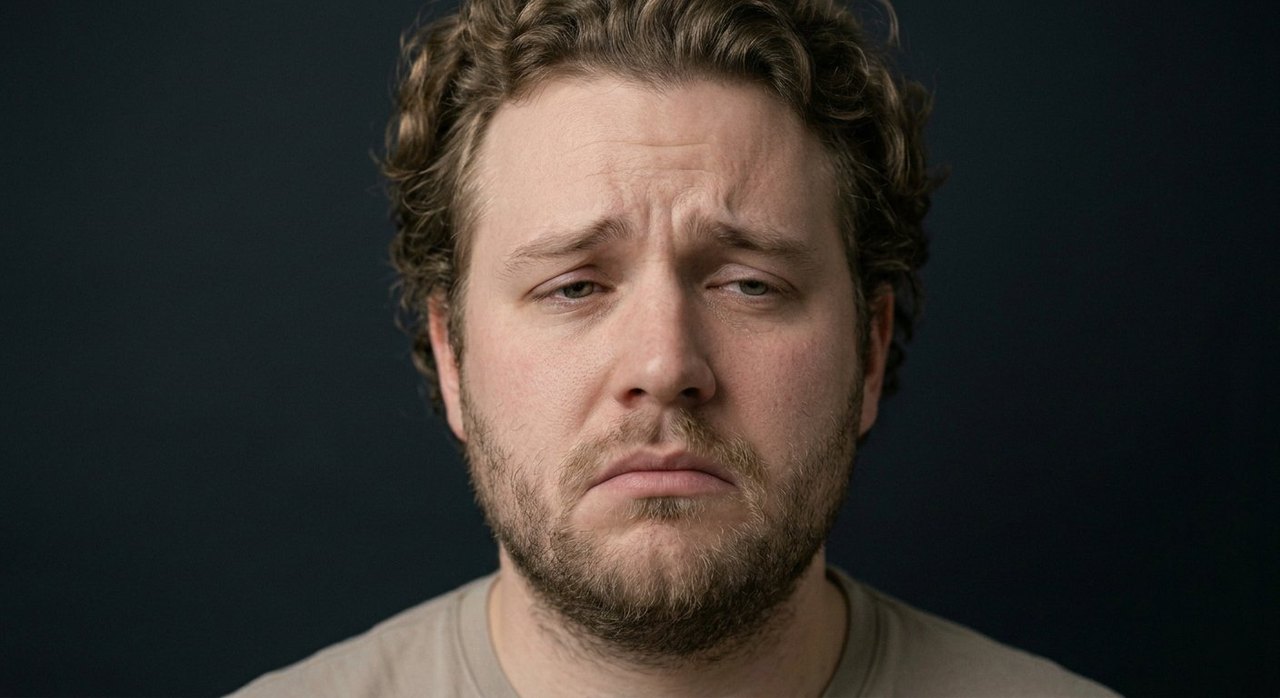
Sadness
A heavy, downward pull. The world loses colour.
Sadness is the body's response to loss. Something that mattered is gone or out of reach. Colour drains from the world, the body slows, energy turns inward. It asks for stillness, comes, and goes. It is not depression.
Sadness is a visitor, not a verdict
Sadness has an image problem. We treat it as an enemy to be defeated, a symptom to be medicated, a cloud to be cleared. It is none of these things. Sadness is information. Something has been lost, or unmet, or ended. The sadness is the acknowledgement. The mistake is not feeling it. The mistake is believing it is the final word on the matter. Sit down with the sadness. Let it tell you what it knows. Ask it what it needs. Often what it needs is time, tears, and company. Then, slowly, it moves on. The sadness was never the problem. Refusing to listen to it was.
"Tears are words that need to be written."
— Paulo Coelho
Sadness has a downward signature. The shoulders drop, the chest pulls inward, the face softens or crumples, and the limbs go heavy. Unlike anger which mobilises the body for action, sadness withdraws energy from the periphery and pulls it toward the centre.
The Nummenmaa body-mapping study found sadness to be one of the most withdrawn emotional states, with reduced sensation in the limbs and concentrated heaviness in the chest and head (Nummenmaa et al., 2014). This biological pattern matches what sadness is for: slowing the body so that processing can happen and so that other people can come close.

Sadness exists because loss is part of being alive, and the body needs a way to register and recover from it. The trigger is rarely random. Common patterns include:
Sadness is one of the few emotions that responds better to staying with it than to trying to lift out. Most attempts to escape sadness deepen it. The following practices are not aimed at making sadness go away but at letting it move through.
Let it be present
Sadness needs to be felt to pass. Trying to cheer up, distract, or push through often prolongs it. Sitting still, allowing tears if they come, and accepting that the day will be slower than usual is often the most direct route.
Be near other people, even quietly
Sadness withdraws the body from connection at the moment connection would help most. Being in the presence of someone safe, without needing to talk or be cheered up, often lifts sadness more than any conversation.
Move gently
Walking outdoors, especially in daylight, lifts heaviness without requiring effort. The point is not to feel better. The point is to remind the body it can move.
Name the loss specifically
Sadness held vaguely is heavier than sadness named. Identifying what specifically is being mourned, even silently, completes a loop the mind keeps trying to close.
If it persists
Sadness that lasts for weeks, comes with hopelessness or thoughts of self-harm, or makes daily function difficult is worth taking to a GP or therapist. This is depression's territory and it responds well to treatment. You do not have to wait for it to pass on its own.
"Sadness is not the opposite of strength. It is the body's recognition that something mattered."
— A frame used in grief and bereavement work
What is the difference between sadness and depression?
Sadness is an emotion that can come and go in response to specific events. Depression is a clinical condition characterised by persistent low mood, loss of interest in things that used to give pleasure, changes in sleep and appetite, and often hopelessness. Sadness usually has a cause and a duration. Depression often does not lift on its own and benefits from professional support.
Where do people feel sadness in the body?
Sadness is most often felt as a weight in the chest, a heaviness in the limbs (especially the arms), a softening or crumpling of the face, and a low energy throughout the body. The body slows down. Some people report a lump in the throat or a sinking in the stomach.
Is it healthy to cry?
Crying releases tension and is associated with feelings of relief afterwards. It does not solve the underlying cause of sadness, but it does help the body process it. People who cry when sad often recover more quickly than those who suppress. There is no medical reason to avoid crying.
Why do I feel sad for no reason?
Sadness can have causes that are not immediately obvious: hormonal shifts, poor sleep, low light exposure, an accumulation of small losses, or unprocessed grief from earlier in life. If sadness arrives without apparent cause repeatedly, looking at body state and recent stressors often reveals the pattern.
How long should sadness last?
Acute sadness from a specific event typically eases within hours or days. Sadness from grief can persist for months or longer, with intensity gradually reducing. Sadness that lasts for more than two weeks, interferes with daily function, or comes with hopelessness is worth discussing with a GP.
- Nummenmaa, L., Glerean, E., Hari, R., & Hietanen, J. K. (2014). Bodily maps of emotions. Proceedings of the National Academy of Sciences, 111(2), 646–651. https://www.pnas.org/doi/10.1073/pnas.1321664111
- Bonanno, G. A. (2009). The Other Side of Sadness: What the New Science of Bereavement Tells Us About Life After Loss. Basic Books.
- Vingerhoets, A. J. J. M., & Bylsma, L. M. (2016). The riddle of human emotional crying: A challenge for emotion researchers. Emotion Review, 8(3), 207–217. https://journals.sagepub.com/doi/10.1177/1754073915586226
Sadness sits at the centre of its family. The other entries are mostly distinguished by intensity, duration, or what specifically is being mourned.
See where sadness sits among the other 402 emotions.
Open Sadness on the wheel