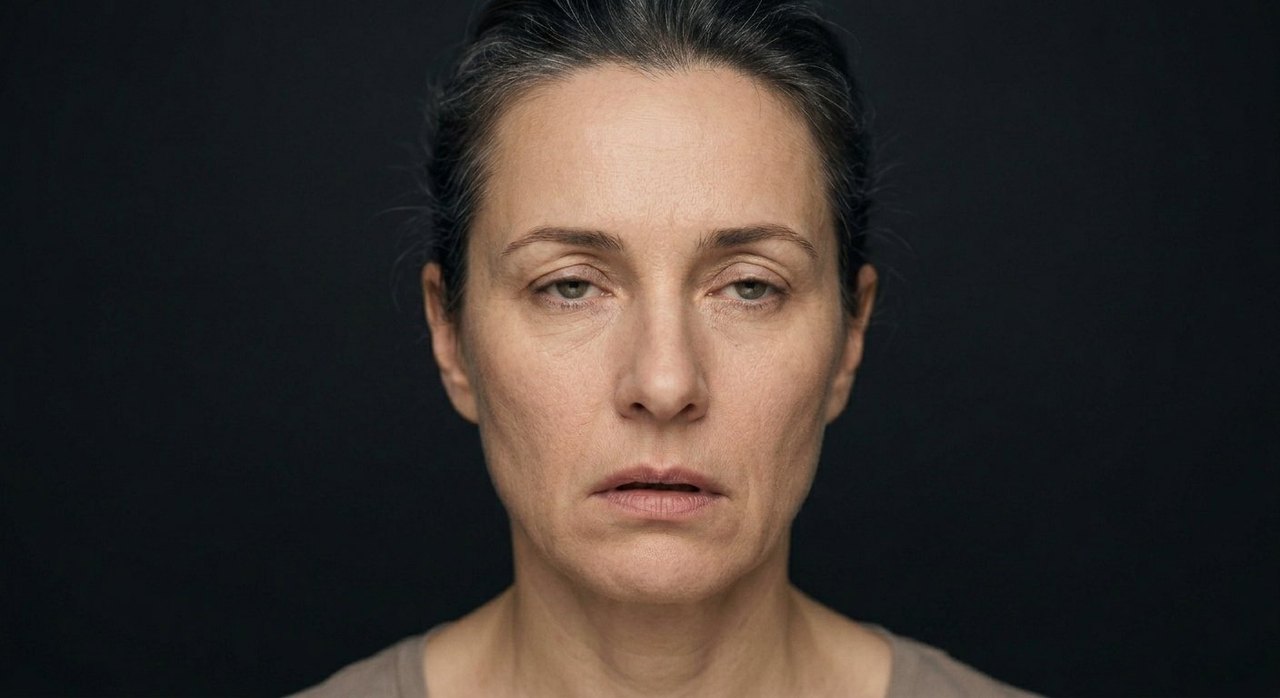
Exhaustion
Deep, bone-level fatigue. No energy left.
Exhaustion is deep, bone-level fatigue with no energy left. The limbs feel heavy in a way sleep does not seem to fix. The mind moves slowly and everything feels like too much. It is not laziness or weakness; it is depletion.
Exhaustion is an emergency, not a status symbol
Exhaustion is not a badge of honour. It is a signal that the system has been running on deficit for too long. Modern culture rewards exhaustion, calls it dedication, hides its cost. The cost arrives anyway, as illness, as damaged relationships, as work that is not as good as it could be. Today, take one thing off your plate. Not tomorrow. Today. Cancel one thing. Delegate one thing. Delete one thing. Exhaustion cannot be powered through. It can only be addressed by reducing the load. The load is always larger than the body can bear, in modern life. Decide to reduce it. The decision is yours.
"Almost everything will work again if you unplug it for a few minutes, including you."
— Anne Lamott
Exhaustion has one of the most distinctive body signatures of any modern emotional state. The arms and legs feel heavy in a particular way that is hard to override. The shoulders sag. The chest is at a low ebb, neither expanded nor braced. The head feels foggy or pressured. There is a quality of withdrawal across the whole body: not active distress, just depletion. The system has shifted out of activation mode and into recovery mode, often without the recovery being available.
Research on exhaustion has expanded significantly with the recognition of burnout and chronic fatigue conditions. The World Health Organisation now classifies burnout as an occupational phenomenon characterised by exhaustion, cynicism, and reduced efficacy (WHO, 2019). McEwen's research on allostatic load has shown how sustained activation depletes the system across multiple measurable markers: cortisol, inflammation, cardiovascular function, sleep quality (McEwen, 1998). The body really does run on a finite resource, and exhaustion is the signal that the reserve is gone.

Exhaustion can arise from many sources, which is part of why it is often misread. The same surface state can come from very different underlying causes. Common patterns include:
Exhaustion is one of the most variable emotional states because what helps depends on what produced it. The following practices help across most types.
Identify the source before deciding what to do
Exhaustion from sustained work demands needs different intervention than exhaustion from grief or from medical issues. Asking what has actually been happening in the months leading up to the exhaustion often reveals the source. Once the source is clear, the right response usually follows.
Sleep matters but does not fix everything
Adequate sleep is a baseline. Without it, no other intervention will fully work. With it, other interventions become possible. But sleep alone does not address depletion from grief, sustained work demands, or medical issues. Treating exhaustion as purely a sleep problem often misses what is actually needed.
Reduce demand where possible
The body needs the input level to drop, not just rest periods to be added on top of the existing demand. This often means saying no to things, even good things, until the system recovers. People who try to recover from exhaustion without reducing demand usually relapse.
Move gently rather than not at all
Counterintuitively, gentle movement (walking, stretching, easy outdoor time) often helps exhaustion more than complete rest does. This is because the body needs some circulation and light demand to recover, not just stillness. The exception is acute exhaustion from illness or grief, where rest is the priority.
If exhaustion persists
Exhaustion that does not improve over a few weeks of reduced demand and adequate sleep is worth taking to a GP. Basic blood work can rule out medical causes. Persistent unexplained exhaustion can also be a sign of depression, anxiety, burnout, or chronic fatigue conditions, all of which respond better to treatment than to pushing through.
"Exhaustion is the body asking for something rest alone cannot provide. The first task is figuring out what the system actually needs."
— A common observation in research on chronic fatigue and burnout
What is the difference between tiredness and exhaustion?
Tiredness is the temporary fatigue that responds to a good night's sleep. Exhaustion is deeper depletion that often does not lift with rest alone. If you sleep eight hours and still feel depleted, the state is closer to exhaustion than ordinary tiredness. The distinction matters because exhaustion usually requires reducing demand, not just resting more, while tiredness usually responds to better sleep alone.
Where do people feel exhaustion in the body?
Exhaustion is felt as heavy limbs, sagging shoulders, a chest at low ebb (neither expanded nor braced), and a foggy or pressured head. There is a quality of withdrawal across the whole body: not active distress, just depletion. Movement requires more effort than it should. The system has shifted into recovery mode, often without recovery being available.
Why doesn't sleep make my exhaustion go away?
Sleep addresses one component of exhaustion (physical fatigue) but not others. If exhaustion is coming from sustained emotional demand, grief, chronic stress, or medical issues, sleep alone does not solve it. The system needs the underlying demand to reduce, not just more rest periods on top of the existing load. People who try to recover from exhaustion through more sleep without reducing demand often find sleep alone insufficient.
When should I see a doctor about exhaustion?
Exhaustion that does not improve over a few weeks of reduced demand and adequate sleep is worth taking to a GP. Basic blood work can rule out medical causes (thyroid, anemia, vitamin deficiencies). Persistent unexplained exhaustion can also be a sign of depression, sleep apnea, chronic fatigue conditions, or autoimmune issues. Self-diagnosing exhaustion as purely psychological without ruling out medical causes is a common mistake.
Is exhaustion the same as burnout?
Exhaustion is one component of burnout but not the whole thing. Burnout, as defined by the WHO, includes exhaustion plus cynicism toward work and a reduced sense of efficacy. A person can be exhausted from grief, caregiving, or illness without being burnt out. Burnout is more specifically about sustained occupational demand producing all three features. Exhaustion alone can be addressed with rest and reduced demand. Burnout often requires changes to the work situation itself.
- McEwen, B. S. (1998). Stress, adaptation, and disease: Allostasis and allostatic load. Annals of the New York Academy of Sciences, 840(1), 33–44. https://nyaspubs.onlinelibrary.wiley.com/doi/10.1111/j.1749-6632.1998.tb09546.x
- World Health Organization. (2019). Burn-out an 'occupational phenomenon': International Classification of Diseases. https://www.who.int/news/item/28-05-2019-burn-out-an-occupational-phenomenon-international-classification-of-diseases
- Maslach, C., & Leiter, M. P. (2016). Understanding the burnout experience: Recent research and its implications for psychiatry. World Psychiatry, 15(2), 103–111. https://onlinelibrary.wiley.com/doi/10.1002/wps.20311
Exhaustion sits in the negative family as one of the major depletion states. It overlaps with numbness when the depletion has extended to feelings, with emptiness when nothing seems worth doing, and with burnout when work specifically has produced the exhaustion.
See where exhaustion sits among the other 402 emotions.
Open Exhaustion on the wheel