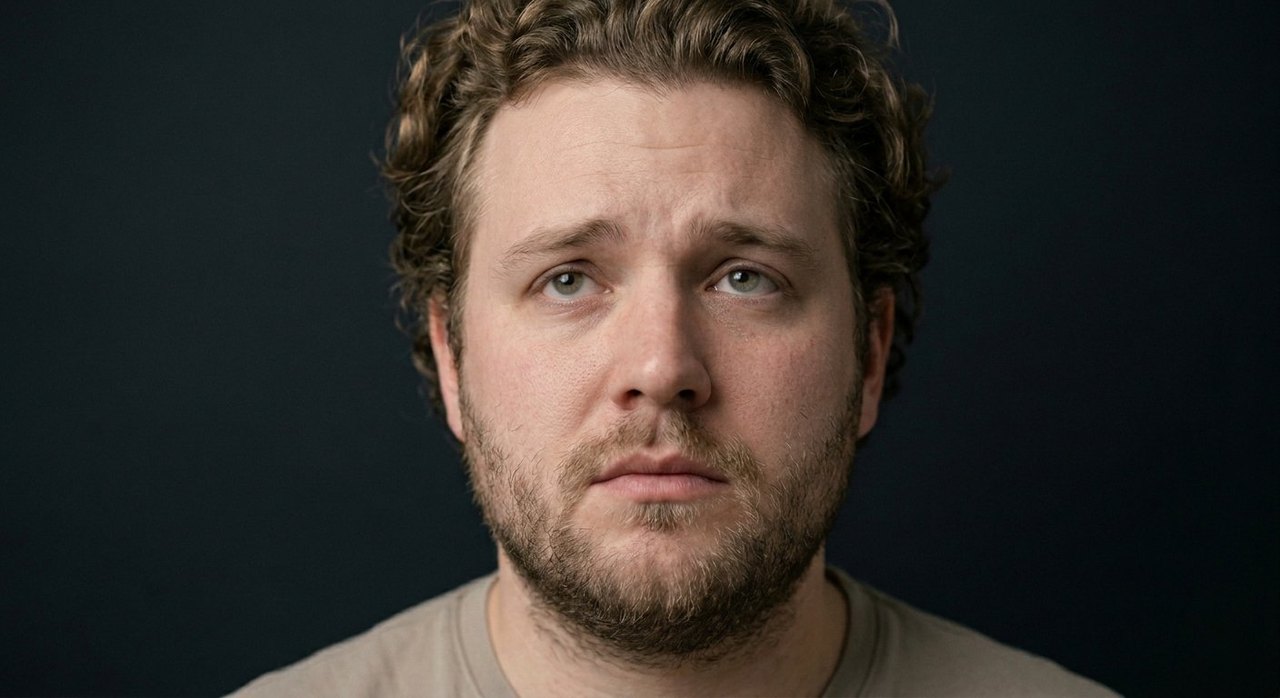
Mirthlessness
The absence of any capacity for laughter.
Mirthlessness is the absence of any capacity for laughter. The chest cannot lift to laughter and the face cannot smile genuinely. What would ordinarily produce laughter stays out of reach. The capacity is lost, not just the opportunity.
When the laughter goes, something quiet is asking for attention
Mirthlessness is the state of having lost, temporarily, the capacity to find anything funny. Jokes land flat. Other people's laughter feels foreign. This is not a character flaw. It is the body reducing the bandwidth available for anything that is not survival. The return of mirth is usually gradual. The first small laugh after a long mirthless stretch is almost shocking. Do not force the return. Do not watch comedy trying to fix yourself. Just live the days. Rest. Eat. Walk. One day a friend will say something ridiculous and you will laugh before you decide whether to. That is the return. It will come. Keep the door open for it.
"Laughter is sunshine. It chases winter from the human face."
— Victor Hugo
Mirthlessness has a distinctive body signature of sustained absence of mirth capacity. The chest cannot lift to laughter. The breath remains heavy. The face cannot smile genuinely with reduced ordinary animation. The voice carries particular flat heavy quality without ordinary inflection. The body holds itself in a way that suggests sustained inability to access mirth: posture often heavy or contracted, gestures reduced, attention engaged with the heaviness rather than with what might produce mirth. The state can be sustained over weeks, months, or longer when underlying conditions including depression or significant grief support it. Sustained mirthlessness often indicates clinical condition warranting attention.
Mirthlessness has been engaged with in research on depression where anhedonia (loss of capacity for pleasure including laughter) is significant feature. Various clinical research has examined how depression and related conditions affect capacity for ordinary pleasures including laughter. The Diagnostic and Statistical Manual of Mental Disorders includes anhedonia as significant feature of major depressive disorder among recognised conditions. The capacity for mirthlessness as sustained state often indicates underlying conditions warranting attention.

Mirthlessness arises through specific conditions affecting capacity for mirth. Common patterns include:
Sustained mirthlessness often warrants attention to underlying conditions. The following help.
Recognise when mirthlessness has crossed into sustained pattern
Brief mirthlessness in particular contexts is often appropriate and passes; sustained mirthlessness that significantly affects daily life warrants attention. Recognising when mirthlessness has crossed into sustained problematic pattern supports appropriate response including seeking assessment for underlying conditions.
Assess for depression and related conditions
Sustained mirthlessness often indicates depression or related conditions warranting clinical attention. Professional assessment supports identification of conditions that may be operating; multiple treatable conditions can produce sustained mirthlessness. Self-management of sustained mirthlessness often does not produce adequate change when clinical conditions are operating.
Address grief when underlying
When mirthlessness reflects significant grief, supporting grief work through various means including grief counselling, sustained connection with others, and various other supports can help. The grief typically reduces over time though may not fully resolve; engagement with grief supports broader healing.
Connect with others including those with capacity for mirth
Sustained mirthlessness often produces isolation that worsens the difficulty. Connecting with others including those with capacity for mirth can support gradual return of capacity though it does not produce immediate change. The connection itself supports broader wellbeing alongside any direct effect on mirthlessness.
If sustained mirthlessness produces significant difficulty
Sustained mirthlessness that significantly impairs functioning, that has been present for weeks or longer, or that is accompanied by other features including thoughts of self-harm warrants professional attention. Therapy, sometimes medication, and various other treatments can help. Crisis resources are appropriate when needed for thoughts of self-harm: UK Samaritans 116 123; US 988; Australia Lifeline 13 11 14.
"Research on depression has examined anhedonia (loss of capacity for pleasure including laughter) as significant feature of major depressive disorder; sustained mirthlessness often indicates underlying conditions warranting attention."
— A summary of research on depression and anhedonia
What is mirthlessness?
Mirthlessness is the absence of any capacity for laughter. The body has been organised around sustained inability to access laughter or mirth, with quality of profound joylessness that has lost the ordinary capacity for being moved to laughter. The chest cannot lift to laughter. The face cannot smile genuinely. There is a quality of being unable to access what would ordinarily produce laughter, of operating from sustained joylessness that has lost capacity rather than just opportunity, of being beyond reach of mirth even when context might warrant it. Mirthlessness specifically refers to the absence of capacity for laughter.
Where do people feel mirthlessness in the body?
Mirthlessness has a distinctive signature of sustained absence of mirth capacity. The chest cannot lift to laughter. The breath remains heavy. The face cannot smile genuinely with reduced ordinary animation. The voice carries particular flat heavy quality without ordinary inflection. The body holds itself in a way that suggests sustained inability to access mirth: posture often heavy or contracted, gestures reduced, attention engaged with the heaviness rather than with what might produce mirth. The state can be sustained over weeks, months, or longer when underlying conditions including depression or significant grief support it. Sustained mirthlessness often indicates clinical condition warranting attention.
How is mirthlessness different from being serious?
Seriousness can coexist with capacity for mirth at appropriate moments. Mirthlessness specifically involves absence of capacity for mirth. A person can be serious without mirthlessness (sustained serious orientation while maintaining capacity for mirth when appropriate). Mirthlessness involves loss of capacity that broader seriousness does not include. Seriousness reflects choice or orientation that may shift in appropriate contexts; mirthlessness reflects loss of capacity that prevents shift even when context would warrant mirth. The distinction matters substantially because the responses appropriate to each differ: seriousness can be respected as personal orientation or appropriate response to particular contexts; mirthlessness as sustained loss of capacity typically warrants attention to what is producing the loss. Various conditions including depression, anhedonia, significant grief, and various other conditions can produce mirthlessness; recognising when mirthlessness is operating supports appropriate response including assessment for underlying conditions.
Why can some people not laugh anymore?
Several conditions can produce sustained inability to laugh. Depression often produces mirthlessness as feature of broader anhedonia; the depression affects capacity for pleasure including laughter, and mirthlessness in depression typically does not lift through ordinary efforts and warrants treatment of underlying depression. Significant sustained grief can produce mirthlessness particularly in early phases of grief; the grief affects capacity for ordinary pleasures including laughter, though mirthlessness in significant grief typically reduces over time as grief is processed. Trauma and trauma-related conditions can produce sustained mirthlessness particularly when trauma has affected broader emotional capacity. Various medical conditions and medication effects can produce mirthlessness including various neurological conditions, certain hormonal conditions, certain medications, and various other conditions. Research on depression has examined anhedonia (loss of capacity for pleasure including laughter) as significant feature of major depressive disorder; sustained mirthlessness often indicates underlying conditions warranting attention. The capacity for laughter can typically be restored when underlying conditions are addressed; various treatments with documented effectiveness exist for the conditions that commonly produce sustained mirthlessness.
How do you get back the ability to laugh?
Several practices help. Recognising when mirthlessness has crossed into sustained pattern is the first step; brief mirthlessness in particular contexts is often appropriate and passes, while sustained mirthlessness that significantly affects daily life warrants attention. Assessing for depression and related conditions supports identification of conditions that may be operating; sustained mirthlessness often indicates depression or related conditions warranting clinical attention, and professional assessment supports identification of treatable conditions. Addressing grief when underlying through grief counselling, sustained connection with others, and various other supports can help; the grief typically reduces over time though may not fully resolve. Connecting with others including those with capacity for mirth can support gradual return of capacity though it does not produce immediate change; the connection itself supports broader wellbeing alongside any direct effect on mirthlessness. When sustained mirthlessness produces significant difficulty, professional support is appropriate; therapy, sometimes medication, and various other treatments can help. Crisis resources are appropriate when needed for thoughts of self-harm: UK Samaritans 116 123; US 988; Australia Lifeline 13 11 14.
No source-level citations are stored for this entry yet. The dictionary draws on the broader literature in affective neuroscience, psychology and cross-cultural emotion research. See the About page for the project's wider references.
Mirthlessness sits in the sadness family as one of its most severe sustained forms. It overlaps with sadness as the broader category, with depression when clinical condition is present, with anhedonia as broader clinical term for loss of capacity for pleasure, with grief when significant loss is involved, and with what research on depression and related conditions has examined as significant feature warranting professional attention and treatment with documented effectiveness.
See where mirthlessness sits among the other 402 emotions.
Open Mirthlessness on the wheel