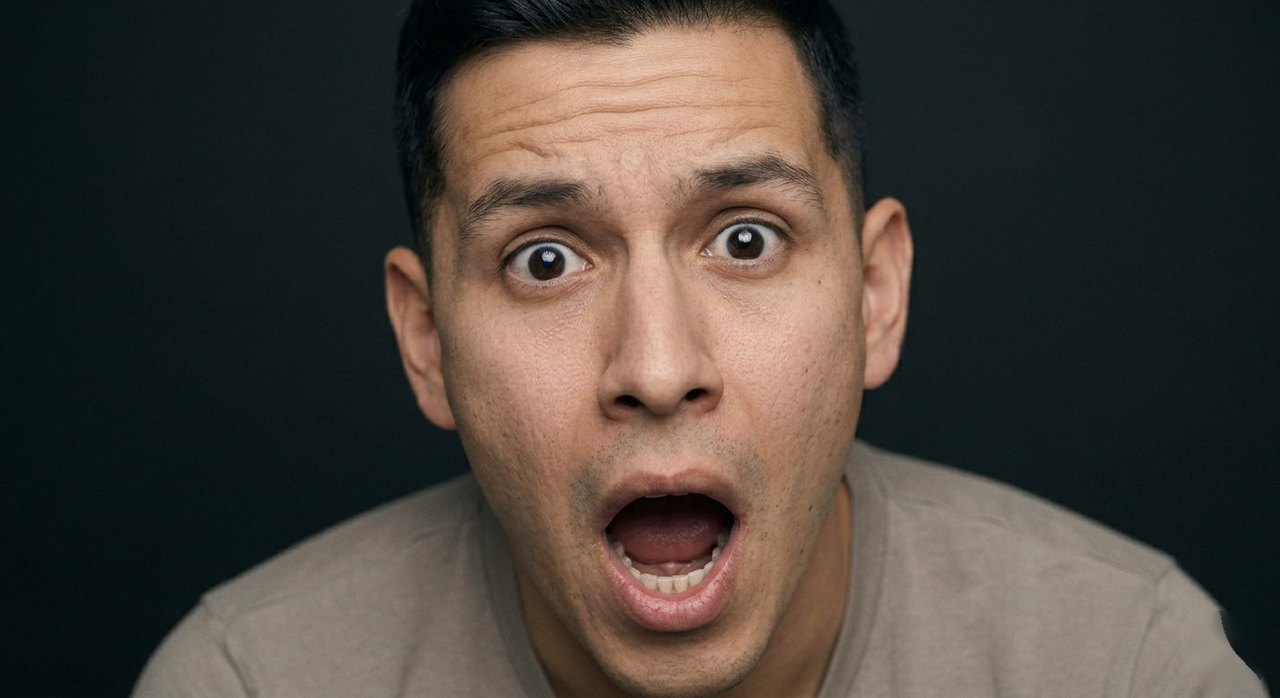
Startle
A sharp, physical flinch. Your body reacts before your mind.
Startle is a sharp, physical flinch. Your body reacts before your mind. The chest jumps, the shoulders pull up, the breath catches. The response completes before conscious thought can catch up. It happens to you before you decide anything.
The body knows before you do
Startle is the reflex that bypasses the thinking mind entirely. The slammed door, the sudden movement, the unexpected touch. The body jumps before consciousness has caught up. This is not weakness. It is hundreds of millions of years of useful biology. After the startle passes, take a breath. Notice how fast your heart is going. Notice how quickly it returns. The body is competent. It overreacts to keep you alive, then settles. Trust this. People who try to override the startle response with willpower exhaust themselves. Let the body have its half-second. Then re-join it. The two of you are on the same team.
"Our body is a machine for living."
— Leo Tolstoy
Startle has a distinctive body signature of involuntary contraction. The eyes blink rapidly. The shoulders pull up. The head pulls forward and down slightly. The chest contracts. The breath catches. The hands may pull in. The whole sequence completes within about 200 milliseconds, before any conscious decision could occur. After the involuntary phase, the body may continue with secondary responses (increased heart rate, vigilance, sometimes fear or laughter depending on the source) but the initial startle is complete and largely uniform across humans. The pattern is one of the most species-typical emotional responses, varying surprisingly little across cultures.
Startle has been extensively studied as one of the most basic emotional responses. Landis and Hunt's foundational research in the 1930s documented the characteristic startle pattern, showing remarkable consistency across individuals (Landis & Hunt, 1939). Subsequent research has identified specific brain circuits involved, particularly through the brainstem startle reflex pathway that bypasses higher cortical processing. The startle response is modulated by current emotional state: people who are anxious or stressed show enhanced startle responses (potentiated startle), while people in positive emotional states often show reduced startle. The startle response is one of the most reliable measures of basic emotional reactivity in laboratory research.

Startle arises through specific conditions involving sudden stimuli that trigger the brainstem reflex pathway. Common patterns include:
Startle is largely involuntary but can be worked with when it has become disruptive. The following help.
Accept the response as involuntary
Startle is one of the most reflexive emotional responses, completing before conscious thought can intervene. Trying to prevent normal startle through willpower typically does not work and adds frustration to the experience. Accepting startle as something that happens to you, rather than something you do, often supports better recovery in the moments after a startle.
Address underlying anxiety or stress
Heightened startle often reflects heightened anxiety or stress states. Addressing these directly often reduces startle frequency and intensity more effectively than working with startle in isolation. When stress levels come down, startle responses typically normalise.
Reduce caffeine if startle is excessive
Caffeine reliably increases startle responses. People with high caffeine intake who experience frequent startling often see meaningful reduction when caffeine is reduced. The effect can take days to weeks to fully appear but is typically noticeable.
Recover quickly after startle
Some people show extended secondary responses after startle: prolonged heart rate elevation, sustained alertness, sometimes anxiety. Practising calming the body after startle (slow breath, gentle movement, recognising that the threat was not real) supports faster recovery and prevents the startle from triggering more sustained activation.
If startle has become disabling
Exaggerated startle that occurs frequently, intensely, or in response to ordinary stimuli, particularly after specific traumatic events, may indicate trauma responses including PTSD. Sustained heightened startle is one of the diagnostic features of PTSD and warrants professional evaluation. Trauma-focused therapy has substantial evidence for reducing exaggerated startle responses. The capacity for normal startle is preserved while the heightened pattern often substantially improves.
"The startle response completes within about 200 milliseconds, before conscious decision could occur. It is one of the most species-typical emotional responses, varying surprisingly little across cultures."
— A summary of foundational research on startle
What is startle?
Startle is a sharp, physical flinch. Your body reacts before your mind. Something sudden has produced an immediate involuntary response that completes before conscious thought can catch up. The chest jumps. The shoulders pull up. The eyes blink. The breath catches. Startle specifically refers to the involuntary physical flinch that happens within milliseconds of a sudden stimulus, before conscious processing can occur. The prereflective quality is essential. Startle is what the body does before the mind has any input.
Where do people feel startle in the body?
Startle has a distinctive signature of involuntary contraction. The eyes blink rapidly. The shoulders pull up. The head pulls forward and down slightly. The chest contracts. The breath catches. The hands may pull in. The whole sequence completes within about 200 milliseconds, before any conscious decision could occur. After the involuntary phase, the body may continue with secondary responses but the initial startle is complete and largely uniform across humans. The pattern is one of the most species-typical emotional responses.
Why do some people startle more than others?
Several factors affect startle threshold and intensity. Anxiety states produce potentiated startle (enhanced startle response); this has been documented in research as one of the more reliable measures of anxious emotional state. Stress, sleep deprivation, caffeine intake, and hypervigilance all increase startle. Trauma responses including PTSD often involve significantly heightened startle as a sustained feature. Individual baseline differences also exist, with some people naturally more startle-prone than others. The combination of personal baseline and current state determines how easily someone startles in any given moment.
Can you control your startle response?
Largely no. Startle is one of the most reflexive emotional responses, completing in about 200 milliseconds, before conscious thought can intervene. Direct conscious control over the startle response itself is not possible. What can be modified is what amplifies or reduces baseline startle: addressing underlying anxiety or stress, reducing caffeine, improving sleep, treating trauma responses when present. People who reduce these amplifying factors often experience meaningful reduction in startle frequency and intensity, even though they cannot directly control any individual startle response.
When is excessive startling a sign of something serious?
Exaggerated startle that occurs frequently, intensely, or in response to ordinary stimuli, particularly after specific traumatic events, may indicate trauma responses including PTSD. Sustained heightened startle is one of the diagnostic features of PTSD and warrants professional evaluation. When startle is accompanied by other features including hypervigilance, intrusive memories, avoidance of trauma reminders, sleep disruption, and emotional reactivity, the combined pattern warrants attention. Trauma-focused therapy has substantial evidence for reducing exaggerated startle responses. The capacity for normal startle is preserved while the heightened pattern often substantially improves with appropriate treatment.
- Landis, C., & Hunt, W. A. (1939). The Startle Pattern. Farrar & Rinehart.
Startle sits in the surprise family as its most rapid and involuntary form. It overlaps with shock when the response is more sustained, with fear when threat assessment follows the startle, with the broader category of reflexive responses, and with what hypervigilance research treats as one of the more measurable features of certain anxiety and trauma conditions.
See where startle sits among the other 402 emotions.
Open Startle on the wheel