Solace
Comfort found in the midst of grief or difficulty.
Solace is comfort found in the midst of grief or difficulty. Something or someone softens the pain without erasing it. The chest carries weight but also a receiving. You are met in your suffering by what helps.
Small comforts hold the large griefs
Solace is the small comfort that makes large pain bearable. The hot drink. The known voice on the phone. The dog's head on your knee. These do not solve the grief. They make it possible to carry it one more hour. Honour the small comforts. Do not disdain them as beneath the size of the pain. They are not. They are exactly the right scale. The pain is enormous and cannot be matched by anything equal. The comforts are small and repeatable. Many small comforts, across many hours, are what get you through. Arrange yours in advance. When grief comes, you will not have the energy to invent them.
"The soul would have no rainbow had the eyes no tears."
— Minquass proverb
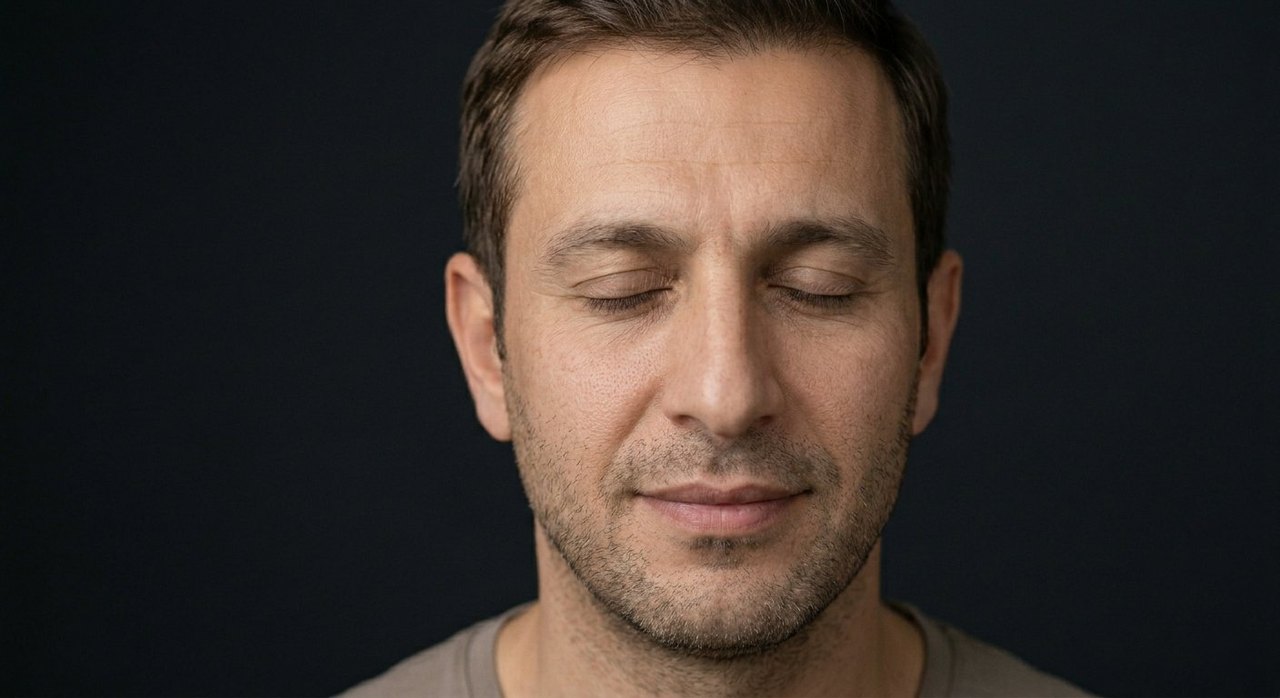
Solace has a distinctive body signature of receiving within difficulty. The chest carries the weight of the underlying difficulty but also a quality of being met, of softening at certain points without the weight fully lifting. The breath becomes slightly deeper. The face often shows particular tender quality, sometimes with tears that have shifted from acute distress to something gentler. The body has accepted comfort that does not pretend the difficulty is gone. There is no false brightness, no performance of being okay; the difficulty remains visible while the solace operates alongside it. The state often produces particular gratitude toward whatever has provided the solace.
Solace has been studied less directly than some other emotions but appears in research on grief, resilience, and what some researchers call meaning-making in difficulty. Research on resilience, particularly Bonanno's work on diverse trajectories of response to loss, has shown that the capacity to find comfort within difficulty is one of the patterns associated with healthy adaptation (Bonanno, 2004). Research on rituals, religious practice, music, art, and natural environments has identified all of these as common sources of solace across cultures, suggesting that the human capacity for solace draws on multiple resources that have been recognised across traditions.

Solace arises through specific conditions involving the presence of something that helps bear difficulty without pretending it is absent. Common patterns include:
Solace is more cultivatable than people sometimes recognise when its specific structure is understood. The following help.
Identify what has provided solace for you historically
People often have particular sources of solace that work for them: specific music, particular places, certain people, specific practices. Identifying these and turning toward them during difficulty supports access to solace more reliably than waiting for it to arrive. The known sources often work even when current difficulty has not yet allowed clear thinking about what would help.
Allow the difficulty to remain present
Solace operates within difficulty rather than by eliminating it. Trying to bypass the difficulty often prevents the solace that would otherwise be available. Allowing yourself to remain in contact with what is actually happening, while also being open to whatever solace arrives, often produces more genuine comfort than trying to push past the difficulty.
Receive what is offered
Many people in difficulty receive less solace than is available because they decline what is offered: closing down to comfort from others, refusing to engage with what previously moved them, isolating from sources of support. Allowing yourself to receive what is offered, even when receiving feels difficult, supports access to solace. The receiving itself is often part of the work.
Don't expect solace to be substantial all at once
Solace often arrives in small portions during difficulty: a moment of music that helps, a particular conversation, a few minutes in a meaningful place. These small portions accumulate. Expecting larger or more sustained solace than is currently available often produces disappointment that prevents recognising the actual solace that arrives. Small moments of solace, recognised and received, support sustainable bearing of difficulty.
If sustained difficulty is producing no solace
Sustained difficulty without any access to solace often signals that professional support would help. Depression, complicated grief, trauma responses can all interfere with the capacity to receive solace that would otherwise be available. Therapy can help work with patterns that prevent access to solace, alongside addressing the underlying difficulty. The capacity for solace is widely shared; sustained inability to access it usually points at something specific that warrants attention.
"Resilience often involves the capacity to find comfort within difficulty rather than the elimination of difficulty. The ability to receive solace is part of what allows people to bear what cannot be fixed."
— A summary of findings from resilience research
What is solace?
Solace is comfort found in the midst of grief or difficulty. The body in pain has located something that softens the pain without erasing it. The chest carries weight but also a particular kind of receiving. There is a quality of being met in your suffering by something or someone that helps. Solace specifically refers to comfort found within difficulty, where the difficulty remains present but is met with something that helps bear it. The within-difficulty quality is essential. Solace does not require the suffering to end; it provides accompaniment through suffering that does not yet end.
Where do people feel solace in the body?
Solace has a distinctive signature of receiving within difficulty. The chest carries the weight of the underlying difficulty but also a quality of being met, of softening at certain points without the weight fully lifting. The breath becomes slightly deeper. The face often shows particular tender quality, sometimes with tears that have shifted from acute distress to something gentler. The body has accepted comfort that does not pretend the difficulty is gone. There is no false brightness, no performance of being okay; the difficulty remains visible while the solace operates alongside it.
What's the difference between solace and comfort?
Comfort is the broader state of ease in good conditions. Solace is specifically comfort found within difficulty. A person can have comfort without solace (ease in good conditions without difficulty to bear). Solace always involves the additional element of difficulty being present, with comfort that addresses it without eliminating it. The two are related but solace is the more specific form that operates through suffering. Solace allows the difficulty to remain real while providing something that helps bear it; comfort typically involves the actual absence of significant difficulty.
Where do people find solace?
Solace draws on multiple sources that have been recognised across cultures: connection with safe others (particularly people who can be present with difficulty without trying to fix it), engagement with art, music, or literature that addresses themes of the current difficulty, religious and spiritual practice (which has developed many specific practices for finding comfort in difficulty), time in natural environments, particular places that hold meaning, specific rituals or routines that have provided comfort historically. Most people have particular sources that work for them; identifying these and turning toward them during difficulty supports access more reliably than waiting for solace to arrive.
Why can't I find any comfort during this hard time?
Sustained difficulty without any access to solace can have multiple causes. Depression often interferes with the capacity to receive comfort that would otherwise be available. Complicated grief can produce sustained inability to find any solace. Trauma responses can shut down the receiving capacity. Sometimes the difficulty is severe enough that solace arrives in very small portions that get missed if expecting larger comfort. Sometimes the usual sources of solace are not available in current circumstances. When sustained difficulty produces no access to solace, professional support often helps; therapy can work with patterns that prevent access alongside addressing the underlying difficulty. The capacity for solace is widely shared; sustained inability to access it usually points at something specific that warrants attention.
- Bonanno, G. A. (2004). Loss, trauma, and human resilience: Have we underestimated the human capacity to thrive after extremely aversive events? American Psychologist, 59(1), 20–28. https://psycnet.apa.org/doi/10.1037/0003-066X.59.1.20
Solace sits in the positive family as one of its more specifically structured states. It overlaps with comfort as the broader category, with consolation when the focus is on response to grief, with compassion when offered to others, with what religious traditions treat as a particular form of grace, and with what resilience research treats as one of the capacities that supports sustained adaptation to difficulty.
See where solace sits among the other 402 emotions.
Open Solace on the wheel