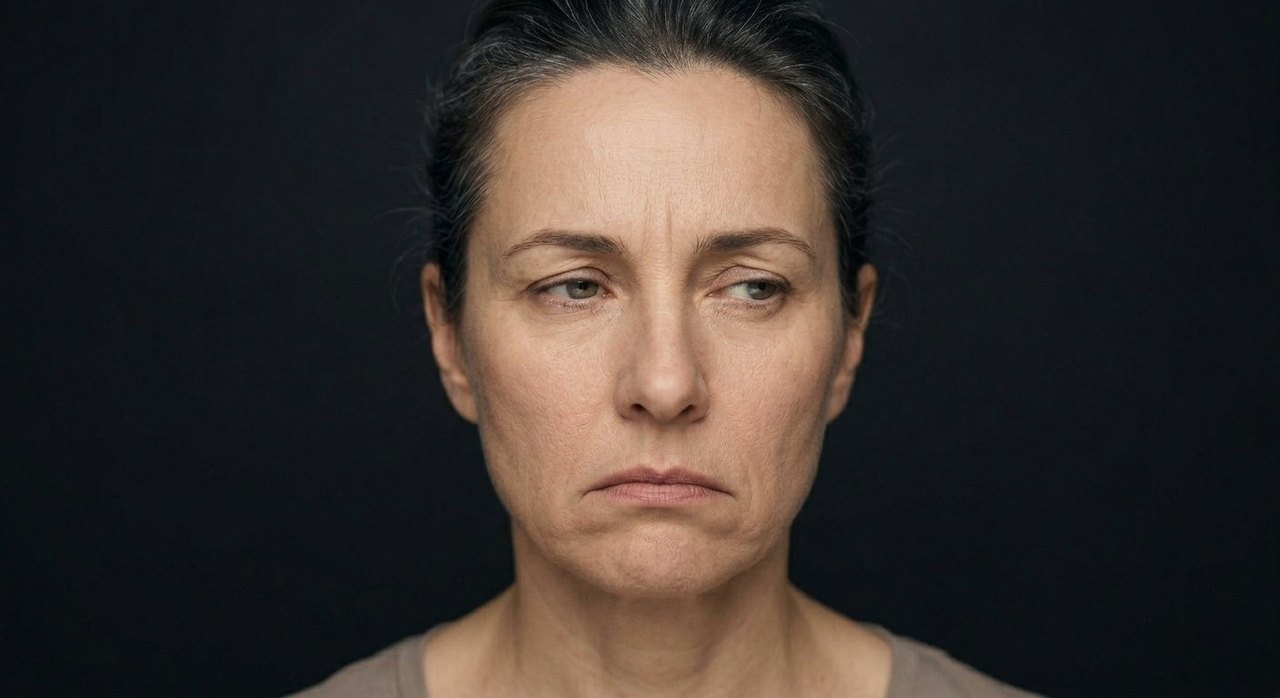
Callousness
Cold insensitivity to others' pain.
Callousness is cold insensitivity to others' pain. The chest is hard and the face stays detached. Suffering that would normally move you does not. The ordinary empathic response is reduced or absent, which gives it moral weight.
Thick skin is useful. Lost skin is not.
Callousness is the state of no longer being affected by others' pain. In some professions it is a protective adaptation. Taken too far, it becomes a condition. The callous person has difficulty forming real connection, because connection requires being affected by another person. If you have become callous, the cure is not to try to feel everything again all at once. The cure is to reintroduce small contact with real people in real situations. Slow conversations. Stories that ask for your attention. Small acts of service where the person is in front of you. The skin can grow back, gradually. The soul can soften again. It takes deliberate work. It is worth it.
"The opposite of love is not hate. It's indifference."
— Elie Wiesel
Callousness has a distinctive body signature of empathic absence. The chest is hard rather than open. The breath remains regular even when others would be activated by witnessing suffering. The face shows particular detached or unmoved quality. The voice often carries flat or matter-of-fact quality when discussing others' pain. The body holds itself in a way that suggests reduced engagement with others' emotional states; movements continue without the disruption that empathic response often produces. The state can be sustained over years when underlying patterns support it, often producing cumulative damage to relationships and to the person's broader moral functioning.
Callousness has been studied within research on antisocial behaviour, psychopathy, and what researchers call callous-unemotional traits, particularly through Frick and colleagues' work on these traits in youth and adults (Frick & White, 2008). Research has shown that callous-unemotional traits are associated with reduced empathic response, both behaviourally and at neural levels, with measurable differences in brain responses to others' distress. The capacity for empathy appears to develop in early childhood and can be affected by various factors including genetic predisposition, early experience, trauma, and sustained patterns of suppression.

Callousness arises through specific conditions involving reduction of empathic response. Common patterns include:
Callousness benefits from attention when recognised, though some forms are more workable than others. The following help.
Recognise callousness when it operates
Callousness often operates without explicit recognition, particularly when ideologically framed or directed at categories of people. Recognising callousness when it is operating, including in yourself, is the first step. The recognition is often resisted by patterns that produced the callousness, particularly when group identification supports it.
Address underlying conditions when present
Some callousness reflects underlying conditions: burnout that has reduced empathic capacity, trauma responses, sustained stress. Addressing these underlying conditions often restores empathic capacity that has been temporarily reduced. Burnout-related callousness in caring professions, for example, often responds to addressing the depletion that produced it.
Restore empathic contact when possible
Some callousness toward specific groups or categories of people can be reduced through restoring empathic contact: engaging with the actual humanity of those being treated callously, hearing their specific experiences, recognising them as full persons. The restoration of contact often produces shifts that direct attempts to change behaviour cannot easily produce.
Examine ideological frameworks that enable it
Sustained callousness toward specific groups often operates through frameworks that legitimise it. Examining these frameworks, including their accuracy and effects, often produces shifts that reduce the callousness they enable. The frameworks are often more workable than the callousness they produce.
If sustained callousness patterns are present
Sustained callousness that has damaged relationships or produced significant impairment often warrants professional attention. Some patterns of sustained callousness reflect specific psychological structures that can respond to specific therapeutic approaches; some are particularly resistant to change. Working with these patterns can produce substantial change in some cases when there is genuine commitment to change. The capacity for empathic engagement can typically be developed or restored when patterns are addressed and there is willingness to do the work involved.
"Research on callous-unemotional traits has shown reduced empathic response at both behavioural and neural levels, with measurable differences in brain responses to others' distress."
— A summary of Frick's research on callous-unemotional traits
What is callousness?
Callousness is cold insensitivity to others' pain. The body has settled into orientation that does not produce the ordinary empathic response to others' suffering, with continued function even when others' distress would normally produce care or attention. The chest is hard rather than open. The face shows particular detached quality. There is a quality of not being moved by what would normally move you, of treating others' pain as not relevant, of having the capacity for empathic response reduced or absent. Callousness specifically refers to reduced or absent empathic response to others' pain, often combined with continued functioning that does not register the pain as relevant.
Where do people feel callousness in the body?
Callousness has a distinctive signature of empathic absence. The chest is hard rather than open. The breath remains regular even when others would be activated by witnessing suffering. The face shows particular detached or unmoved quality. The voice often carries flat or matter-of-fact quality when discussing others' pain. The body holds itself in a way that suggests reduced engagement with others' emotional states; movements continue without the disruption that empathic response often produces. The state can be sustained over years when underlying patterns support it, often producing cumulative damage to relationships and to the person's broader moral functioning.
How is callousness different from professional distance?
Professional distance is appropriate constraint in roles that require it, including medical, legal, or other contexts where excessive empathic activation would impair function. Genuine professional distance typically preserves underlying empathy that is appropriately constrained rather than absent. Callousness involves actual reduction in empathic capacity rather than appropriate constraint. The distinction matters because professional distance can be healthy while callousness typically damages both the person and those around them. Burnout-related callousness in caring professions is well-documented and often develops when sustained empathic demands exceed what the person can manage; this typically responds to addressing the underlying depletion. Sustained callousness without burnout context warrants different attention.
Why are some people callous?
Multiple factors can produce sustained callousness. Research has identified that callous-unemotional traits have some genetic basis and develop through complex interaction of biology and early experience; some individuals have reduced empathic response from early life that appears partly heritable. Some callousness develops as protective response to sustained exposure to others' suffering (in war, caring professions, abusive environments); the shutdown is initially protective but can become sustained. Ideological framing of out-groups produces selective callousness toward specific targets while empathy may remain intact toward in-group members. Some sustained callousness reflects specific psychological patterns including antisocial personality features or particular trauma responses. Different causes warrant different responses; some forms are more workable than others.
Can callousness be reversed?
Some forms more readily than others. Burnout-related callousness in caring professions typically responds to addressing underlying depletion. Callousness toward specific groups maintained by ideological frameworks often reduces when empathic contact with the actual humanity of those being treated callously is restored. Trauma-related callousness often responds to trauma-focused treatment. Some patterns of sustained callousness reflecting genetic predisposition or established personality patterns are more resistant to change, though specific therapeutic approaches can produce substantial change in some cases when there is genuine commitment. Recognising callousness when it is operating is the first step; the recognition is often resisted by patterns that produced it. Working with the underlying conditions and patterns often produces better outcomes than direct attempts to change behaviour without addressing what produces it. The capacity for empathic engagement can typically be developed or restored when patterns are addressed.
- Frick, P. J., & White, S. F. (2008). Research review: The importance of callous-unemotional traits for developmental models of aggressive and antisocial behavior. Journal of Child Psychology and Psychiatry, 49(4), 359–375. https://acamh.onlinelibrary.wiley.com/doi/10.1111/j.1469-7610.2007.01862.x
Callousness sits in the negative family as one of its most morally significant forms. It overlaps with cruelty when active harm-causing is added, with detachment when broader emotional distance is involved, with indifference when caring is absent, with what research on callous-unemotional traits has identified as a meaningful psychological pattern, and with what moral philosophy has engaged with as one of the orientations that consistently produces moral failure when sustained.
See where callousness sits among the other 402 emotions.
Open Callousness on the wheel