Hope
A quiet belief that something good is possible.
Hope is the quiet belief that something good is possible. The body reaches toward a future that has not yet arrived. It allows action in the absence of guarantee. Hope is not a prediction. It is a stance.
Hope is not a feeling. It is a discipline.
Hope as a feeling comes and goes. Hope as a discipline is what you choose to do when the feeling is absent. Show up to the practice. Make the call. Plant the thing. Hope is not the conviction that things will work out. It is the willingness to act as if they might, even when you have no evidence either way. People often confuse hope with optimism. Optimism predicts good outcomes. Hope makes no prediction at all. Hope just keeps moving. In the long run, the hopeful person reaches places the optimist cannot, because the hopeful person did not need favourable conditions to begin.
"Hope is the thing with feathers that perches in the soul."
— Emily Dickinson
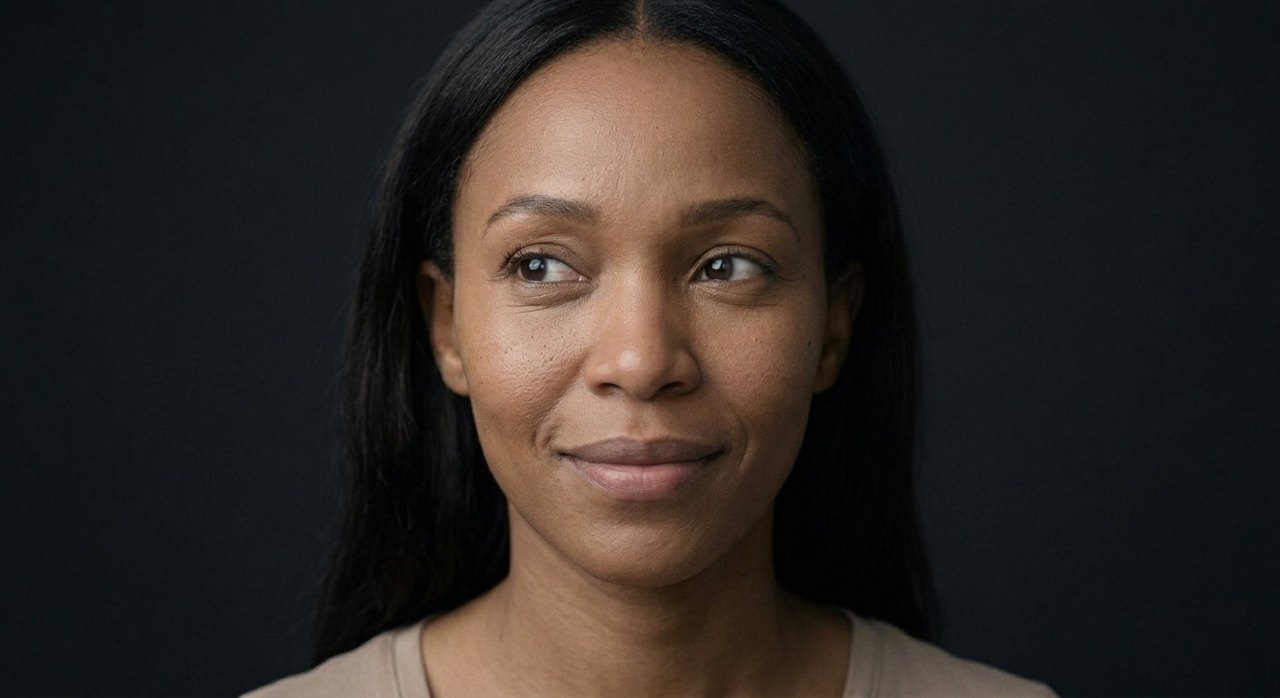
Hope has a soft, opening signature. The chest lifts gently. The head feels lighter. The face softens, sometimes with a small smile. Unlike excitement, which is forward-pointed and activated, hope is forward-pointed and settled. The body is leaning toward something without rushing.
Research on hope has distinguished it from optimism and shown it functions differently in the body and in behaviour. Snyder's hope theory describes hope as a combination of agency (belief that you can act) and pathways (belief that routes exist), and links higher hope to better outcomes in health, education, and recovery from trauma (Snyder, 2002). Hope is associated with sustained motivation under difficulty in ways that pure optimism is not.

Hope is not random. It arises in response to specific conditions and dies in response to others. Common patterns that allow hope include:
Hope can be cultivated. The following are practices that tend to make hope more available, especially in difficult circumstances.
Identify one small possible step
Not the whole solution. One thing you could do this week. Hope dies in the face of overwhelming complexity. It revives in the face of one small concrete possibility.
Find people who have come through it
If you are facing illness, divorce, addiction, grief, or any specific difficulty, the people who have been there before are often the most hope-restoring company. Their existence is evidence that this is survivable.
Distinguish between forecasting and stance
Trying to predict whether things will work out is exhausting and often inaccurate. Choosing to act as if good outcomes are possible, regardless of prediction, is a different cognitive move. The second is more sustainable than the first.
Reduce contact with hopelessness inputs
Constant exposure to news of catastrophe, social media spirals, or relationships that drain hope make hope harder to maintain. Curating these inputs is not denial. It is preserving the resource that lets you act on what is actually in front of you.
If hope is gone for a long time
Sustained hopelessness, especially with thoughts of self-harm, hopeless about specific aspects of life like work or relationships, or a flat lack of caring about future, can be a marker of depression and is treatable. Hopelessness lasting more than a couple of weeks, particularly with other symptoms, is worth taking to a GP. You do not have to wait for it to come back on its own.
"Hope is not the conviction that something will turn out well, but the certainty that something makes sense, regardless of how it turns out."
— Václav Havel
What is the difference between hope and optimism?
Optimism is a general disposition: things tend to work out. Hope is a more specific stance toward a particular future, often held in the face of difficulty. Optimism predicts good outcomes. Hope motivates action toward good outcomes without requiring prediction. Hope tends to be more durable in hard circumstances because it does not depend on the evidence pointing the right way.
Where do people feel hope in the body?
Hope is felt most often as a soft lifting in the chest, a lightness in the head, and a slight softening of the face. The body leans forward gently rather than rushing. Hope is quieter than excitement, more settled than anticipation. Some people describe it as warmth or opening.
Can you have hope without optimism?
Yes. Many people in genuinely difficult circumstances have functional hope without being optimistic. They are not predicting good outcomes. They are choosing to act as if good outcomes are possible, which is a different cognitive move. This kind of hope is often sturdier than optimism because it does not collapse when circumstances are bad.
Why do I feel hopeless?
Hopelessness arises when no pathway forward seems visible, when actions do not seem to produce results, or when the future seems closed. Brief hopelessness is normal during difficulty. Sustained hopelessness, especially with thoughts of self-harm or with depression symptoms, is worth taking to a GP. It is treatable and often shifts faster than people expect with the right support.
How do you build hope?
Hope responds to specific practices: identifying one small possible step, finding people who have come through similar difficulties, distinguishing between predicting outcomes and choosing a stance, and reducing constant exposure to hopelessness-feeding inputs. Hope held in alignment with values, rather than tied to specific outcomes, tends to be the most durable form.
- Snyder, C. R. (2002). Hope theory: Rainbows in the mind. Psychological Inquiry, 13(4), 249–275. https://www.tandfonline.com/doi/abs/10.1207/S15327965PLI1304_01
- Frankl, V. E. (1946/2006). Man's Search for Meaning. Beacon Press.
- Bryant, F. B., & Cvengros, J. A. (2004). Distinguishing hope and optimism: Two sides of a coin, or two separate coins? Journal of Social and Clinical Psychology, 23(2), 273–302. https://guilfordjournals.com/doi/10.1521/jscp.23.2.273.31018
Hope sits in the anticipation family alongside other forward-pointed emotions. It is gentler than excitement, more specific than general optimism, and warmer than expectation.
See where hope sits among the other 402 emotions.
Open Hope on the wheel